What the Bear Market for Babies Means for Your Portfolio
By Matthew Lloyd (Director of Operations)
Reviewed and approved by James McKnight (Founder & CEO, Registered Portfolio Manager) — “The Prophet of Profit”

“It is not politic in the commonwealth of nature to preserve virginity. Loss of virginity is rational increase, and there was never virgin got till virginity was first lost.”
– Shakespeare, All’s Well That Ends Well
“Virginity is peevish, proud, idle, made of self-love—which is the most inhibited sin in the canon. Keep it not, you cannot choose but lose by ‘t.”
– Shakespeare, All’s Well That Ends Well
“Thy mother felt more than a mother’s pain,
And yet brought forth less than a mother’s hope.”
– Shakespeare, Henry VI (Pt 3)
Cloudy With a Chance of Population Collapse: How Falling Birth Rates Threaten Global Growth
55% of Canada’s economy is based on consumers and consumption. This rises to nearly 70% for the U.S. No consumers, no consumption, and that hits everybody in the wallet; bad for us investors.
Today I’m doing a deep dive on a bear market that doesn’t get much attention: babies. So, strap in for a history of alarmism, government meddling in our sex lives (both for and against baby-making), and an analysis of the next existential concern for investors.
Apocalypse Not: The Malthusian Misfire
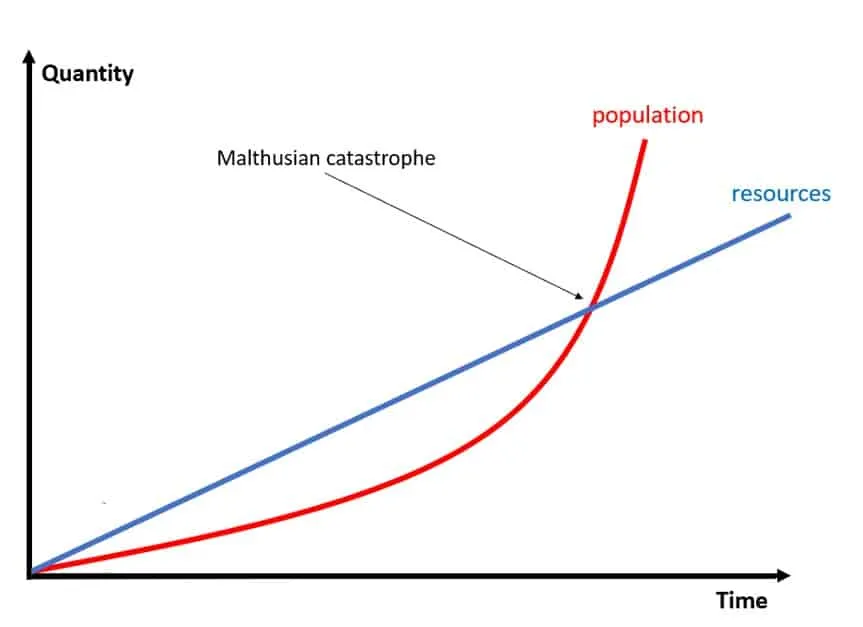
Picture for a moment Thomas Malthus, history’s grumpiest mathematician, scratching out humanity's death warrant with a quill pen. His elegant 1798 equation was simple: geometrically amorous humans plus arithmetically challenged agriculture equals an all-you-can’t-eat buffet featuring famine, disease, and war. Yet here we sit, two centuries later, wasting enough food to feed continents—one third of global production—while our bathroom scales groan in protest—43% of all adults are overweight. Malthus’s ghost must be muttering about how we’ve ruined his perfectly good apocalypse with tragi-comic abundance.
Bear Market for Babies: Why Investors Should Watch Fertility Data
So, consider the bear market for babies. Governments have a proud history of barging into bedrooms. In fact, long before TikTok tracked your dance moves and Amazon predicted your purchases, bureaucrats were treating human reproduction like a performance metric in desperate need of optimization.
Bachelor‑Shaming Olympics: Ancient Greece’s Fertility Games
Picture ancient Sparta, where bachelor-shaming was almost an Olympic sport. While modern singles may reasonably dread awkward questions at family dinners, die-hard Spartan bachelors had to parade through winter town squares in only their tunics, lustily singing about their well-deserved punishment for flouting nature’s laws.
If you're wondering why Sparta's population growth strategies aren't taught in modern public policy courses, consider their core thesis: that the best way to encourage procreation is to turn potential fathers into shivering phallic-popsicles in front of their potential dating pool.
Birth Permits and Black‑Market Babies: China’s Population Police
Fast-forward two millennia to China’s One-Child Policy, circa 1980 to 2015, where the state's bedroom surveillance would make even a Spartan blush. Instead of incentivizing baby-making, China's "population police" became history's most zealous contraception advocates. They tracked women's menstrual cycles with all the feverish attention of tech bros watching their crypto portfolios. The result? Female infanticide and a generation of Heihaizi ("black children”) living like bureaucratic ghosts—unable to access medical care or library books because, officially, they didn’t exist.
The Overpopulation Myth: Thanos‑Style Economics Debunked
Which brings us to the present. Among the chattering classes, it's a common refrain that Earth's primary problem is overpopulation, and many now regard childlessness as a form of global penitence. This vaguely nihilistic viewpoint finds clear illustration in Thanos's evil plan in Avengers: Infinity War—to save the universe from resource scarcity by wiping out half of all life. Those still laboring under the misapprehension of endless population growth seem to find this universal genocide admirable in principle, if not in execution. But just as generals fight yesterday's wars, pop culture clings to stale tropes.
Storks on Strike: Global Birth Rates Hit Record Lows
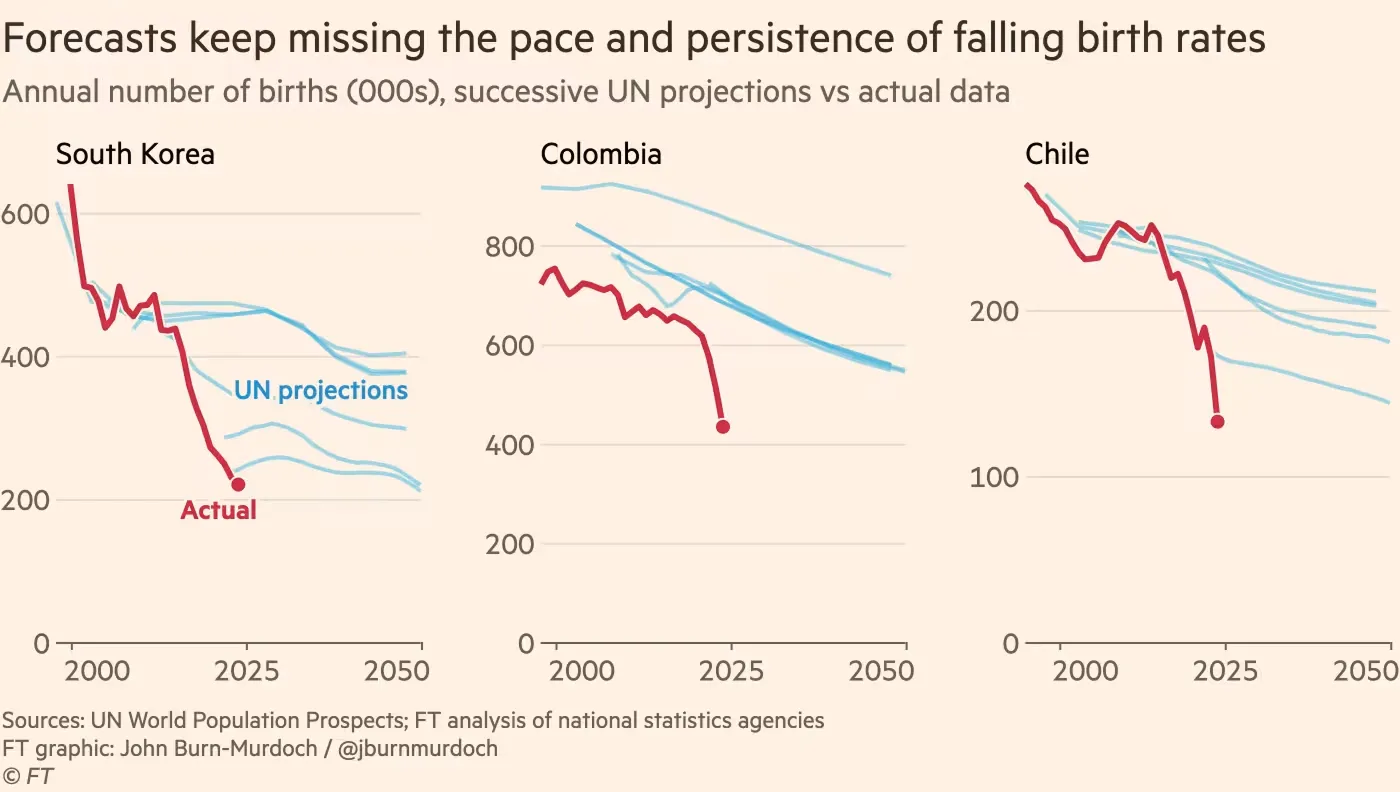
Today the real concern is depopulation. A 250-year-old baby boom is turning into a bust. Consider that the replacement level of fertility for a population is 2.1 children per woman of child-bearing age. In Seoul, South Korea, the birth rate has plummeted to .55 children per woman—a number so low it makes the Japanese look positively frisky (at 1.20).
The statisticians at the UN, bless their spreadsheet-loving hearts, keep insisting that this is just a phase. Their models, built on the optimistic assumptions of post-war baby booms predict that we'll eventually rediscover the joys of procreation. But the only reliable thing about their forecasts is being wrong:
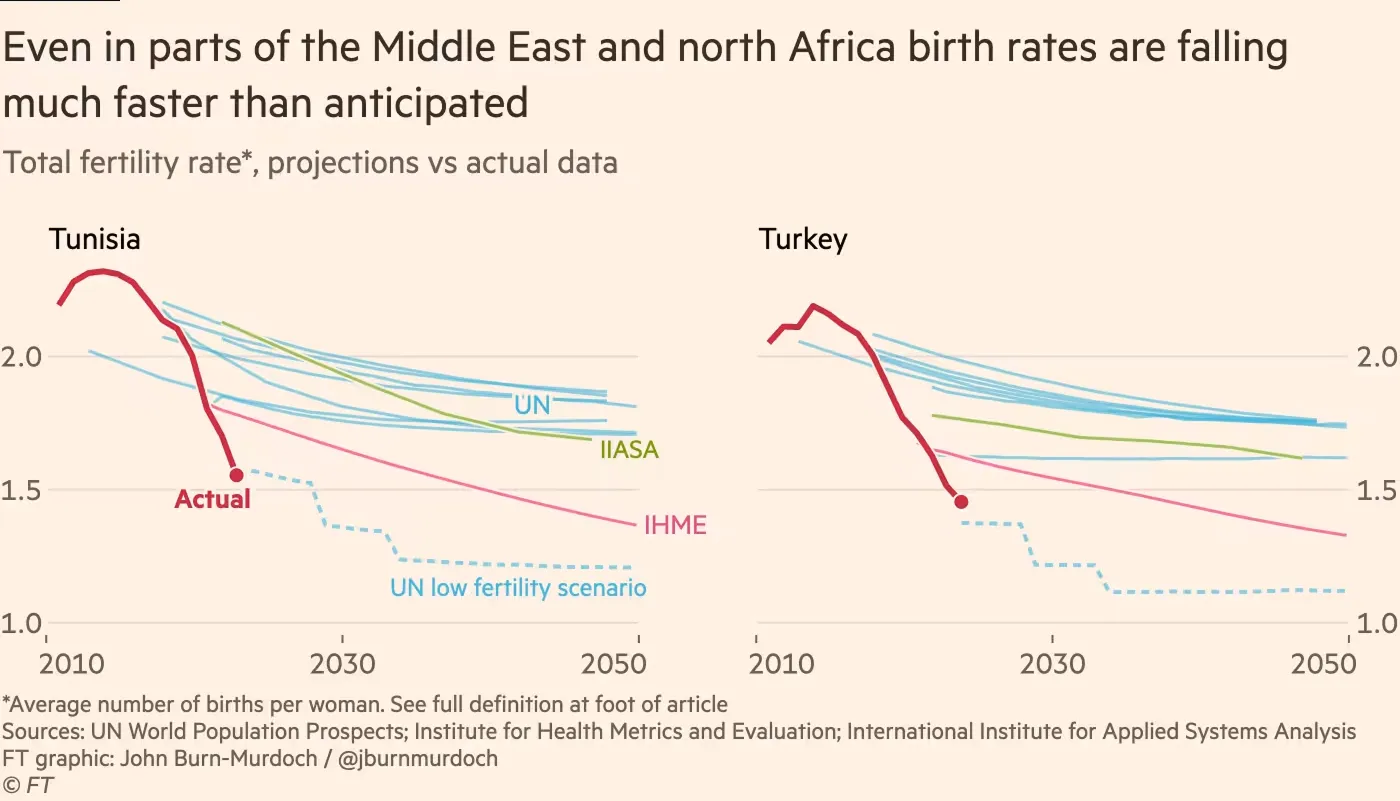
And if you thought that the Middle East and Africa were immune from this conjugal timidity, think again:
The Young, the Few, the Overworked
Government population wonks are still projecting an increasing global population, but the country-specific charts consistently show sub-replacement fertility levels. This marks the first sustained decline since the Black Death.
But isn’t this a good thing for trees, and whales, and all manner of adorable critters? Very likely yes, but with less charming consequences for Homo Economicus.
To grasp the fiscal reality of a shrinking population, imagine an inverted pyramid balancing on its point, wobbling precariously: at the narrow bottom, a handful of millennials in office chairs sweat and strain, while above them looms a vast, expanding mass of retirees in golf carts and leisure suits. Every year, the base shrinks while the top grows heavier, defying both gravity and economics.
But it's not just about paying for pensions. Young people, it turns out, are the rocket fuel of innovation and dynamism. They file the most breakthrough patents. They take the biggest risks. They dream up the crazy ideas that “put a ding in the universe.” A world with fewer young people is likely to be one with less creative destruction, less disruption, and much less growth.
What’s Causing the Fertility Freefall?
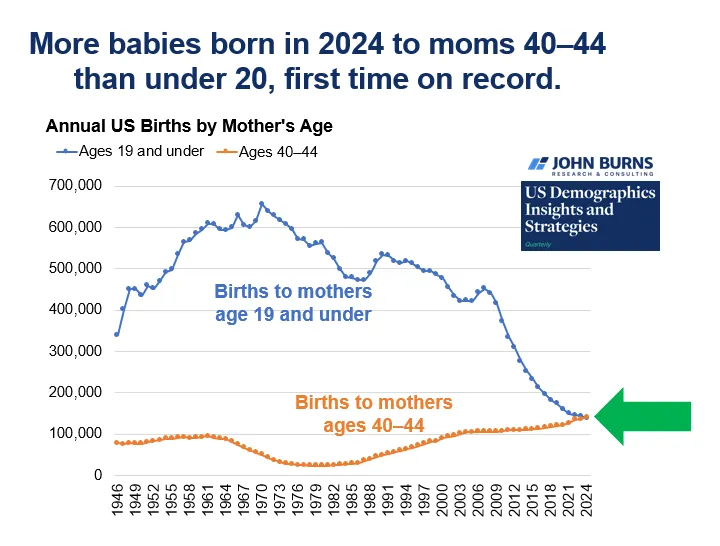
But what's driving this global baby bust? Nobody really knows. Conventional wisdom tells us that as societies grow wealthier and more urban, birth rates naturally decline. It makes intuitive sense that women’s increased education and workforce participation has led to less childbearing. But fertility rates are falling precipitously all over the world, including countries that are not suffering from an embarrassment of riches. A quiet revolution is unfolding, as women across the globe decide that perhaps their destiny doesn't include a diaper bag—at least not anytime soon.
Baby Bribes Fail: Why Cash Can’t Spark Conception
And even governments with the most fiscal firepower have been spectacularly ineffective at reversing the reproductive recession; it turns out that women are not easily bribed. France lavishes 3.5-4% of GDP annually on pro-natalist policies—from direct payments to services and tax breaks—the highest in the OECD. Yet 2022 saw fewer French births than any year since World War II.
Nordic countries initially enjoyed a modest birth rate bump from their world-leading family support systems, only to watch fertility decline once these generous benefits became the new normal. South Korea, facing demographic free-fall, has grown so desperate it's considering an astounding $70,000 payment per newborn.
And these are the world's wealthiest nations—the ones with bureaucracies that actually work most days. If they're stumped, what chance do countries have where keeping the lights on counts as a policy win? Many governments couldn’t legislate their way out of a paper bag, and this is no exception. So, men wave their hands, women ignore them, and we’re in for a long period of depopulation.
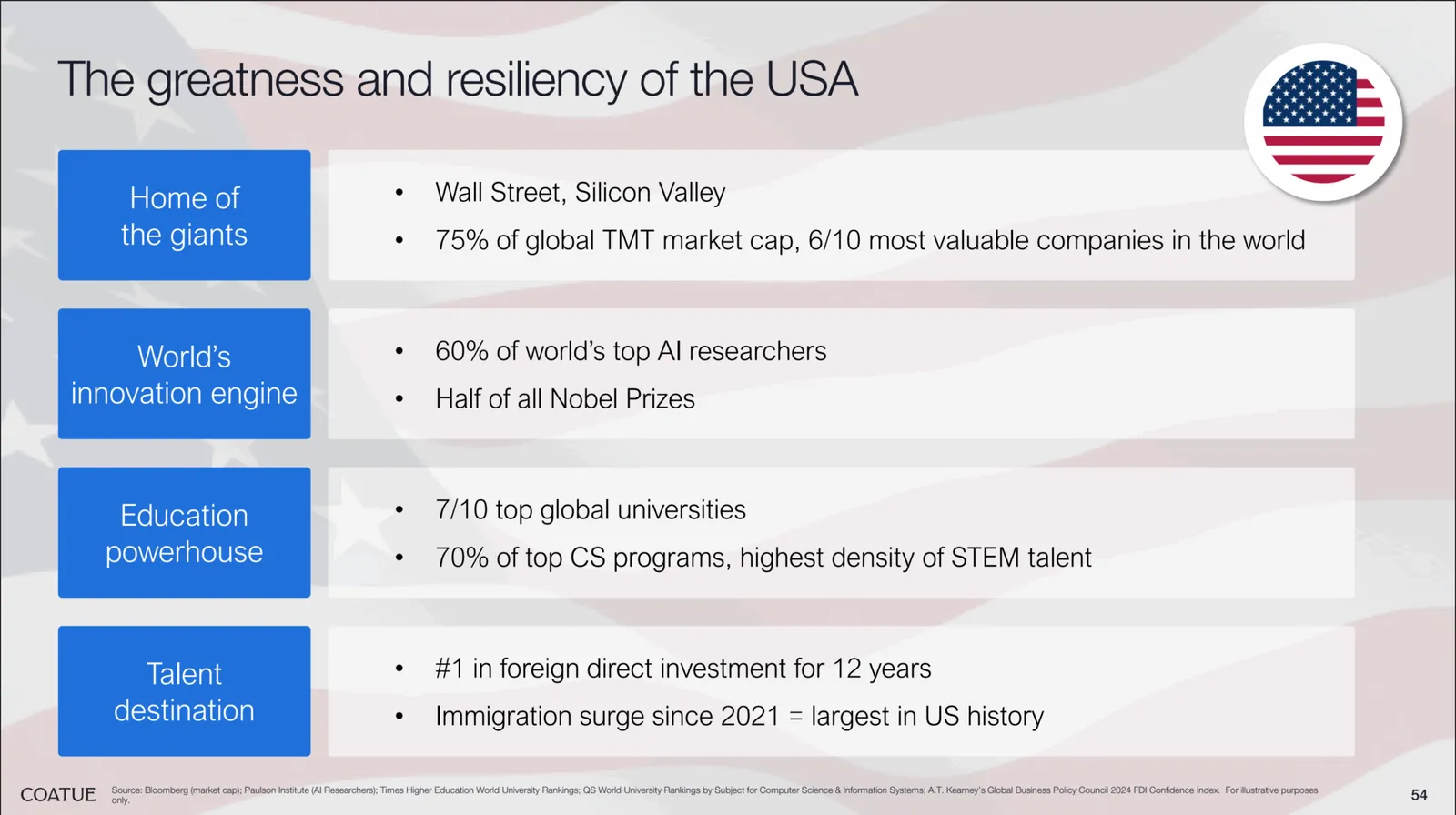
America’s Demographic Edge: Immigration & Higher Birth Rates
Falling population will sap growth all over the world. Remember, fewer people means less consumption, less jobs, and smaller wages. So, what are we doing about this at Wealth Preservation Management? We are capitalizing on America’s demographic advantage.
The U.S. has enviable demographics, with a younger population, better birth rates, and an irresistible magnetism to international talent and capital. Not only that, but the U.S. is one of the few nations in the world that people risk their lives and break the law to enter.
When it comes to population prospects, the U.S. isn't just the best house in a bad neighborhood—it's throwing a party while the rest of the block is turning out the lights.
Portfolio Playbook: Investing Amid Demographic Decline
Let's be frank: while we're proud Canadians, nationality should have nothing to do with your wallet. Your wealth is our top priority. The U.S. wins, and Wealth Preservation Management will continue to relentlessly pursue the best investment returns for our clients.
We leave you with a valedictory prediction: the reproductive recession is the next crisis narrative.
Ka-ching, the check is in the mail.
Other sources:
https://www.economist.com/china/2024/03/21/chinas-low-fertility-trap
https://www.economist.com/finance-and-economics/2024/05/21/can-the-rich-world-escape-its-baby-crisis
https://www.economist.com/leaders/2024/05/23/why-paying-women-to-have-more-babies-wont-work