Is Growth Investing Right For You? 5 Signs You’re the Wrong Fit
By Matthew Lloyd (Director of Operations)
Reviewed and approved by James McKnight (Founder & CEO, Registered Portfolio Manager) — “The Prophet of Profit”

He might as well plant an oak in a flower-pot, and expect it to thrive, as imagine he can restore her to vigour in the soil of his shallow cares!
Wuthering Heights (Emily Bronte)
He who wants to keep his garden tidy doesn’t reserve a plot for weeds.
Dag Hammarskjold
Is Growth Investing Right For You? Why Alignment Comes Before Assets
Before you commit your capital, you must ask: is growth investing right for you, or are you setting yourself up for a financial headache? There’s a version of investing that’s risk-free, smooth, and reliably above average. It just doesn’t exist in the real world. What does exist is a disciplined growth approach that can compound over time—if you have the time horizon and temperament for it.
Here’s what that focused portfolio management looks like in practice: our Growth Model Portfolio achieved a CAGR of 18.15% from June 30, 2017 to December 31, 2025.1
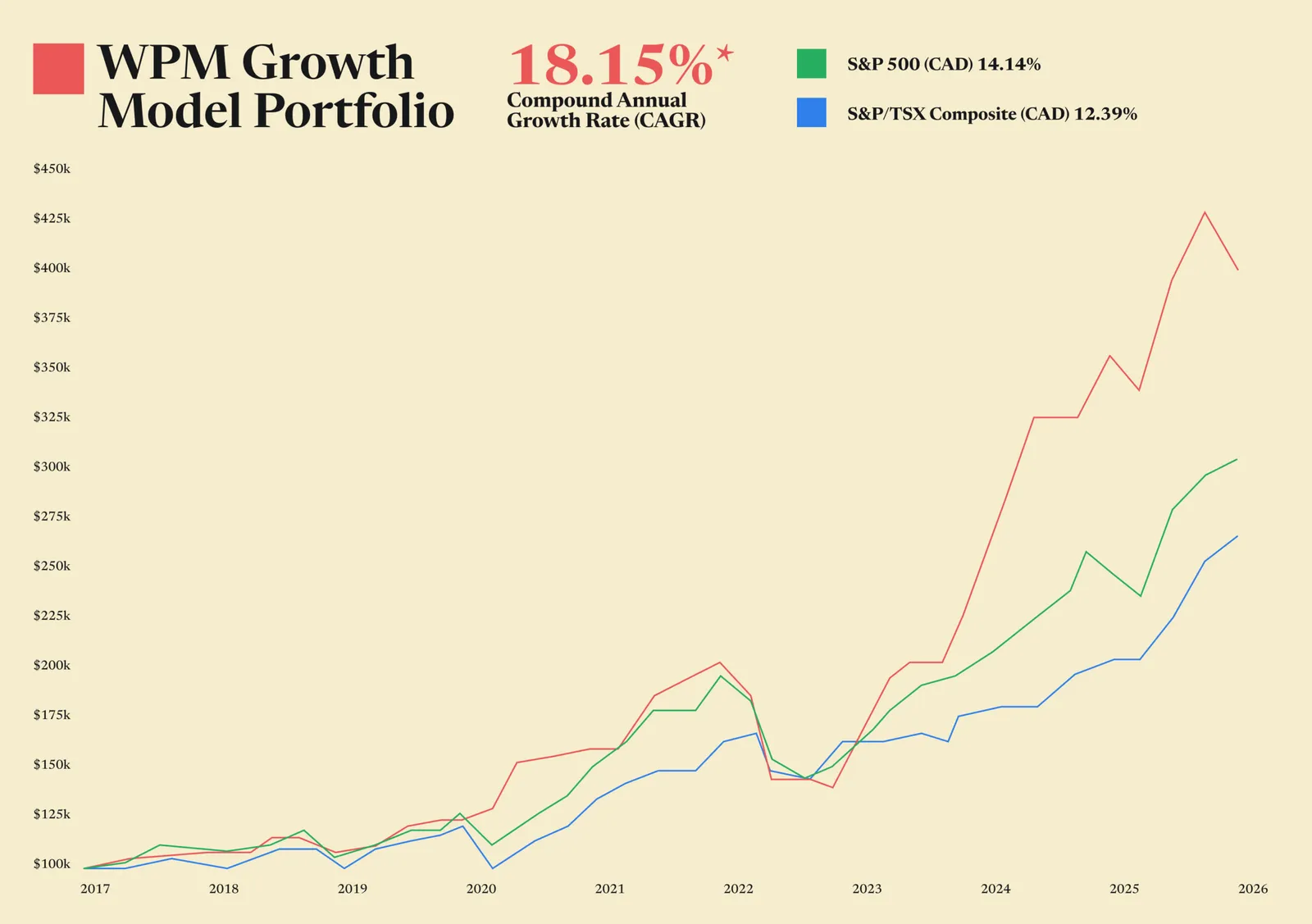
1CAGR independently recalculated by DeVisser Gray LLP. Click here for their report. Return is shown in Canadian dollars, gross of WPM's 2% fee. Past performance doesn't guarantee future returns. Information herein is not guaranteed as to accuracy and completeness.
That number isn’t a promise. It’s a receipt. And it comes with a price that never shows up in the marketing: there were stretches along the way that felt lousy: drawdowns, ugly headlines, and periods where the “right” move was to do nothing because the process didn’t change.
Which is exactly why we’re not trying to be the right firm for everyone. A Portfolio Manager’s first job is expectation management, before asset management. In fact, if we’re doing our job properly, we’ll say “no” fairly often. The match between investor and strategy is one of the most underrated drivers of durable results, and pretending otherwise helps nobody.
If you’re a serious investor in Vancouver or beyond—working hard and trying to build real wealth without turning it into a second job—you’re likely in the right place. The goal of this post isn’t to be exclusive. It’s to be clear.
Let’s save us both some time. If you recognize yourself in this list, we aren’t the firm for you.
1) You want growth, but you can’t tolerate volatility
Growth investing isn’t a straight line. Even great businesses don’t deliver great experiences every quarter. Prices swing. Headlines scream. Markets treat normal uncertainty like a scandal.
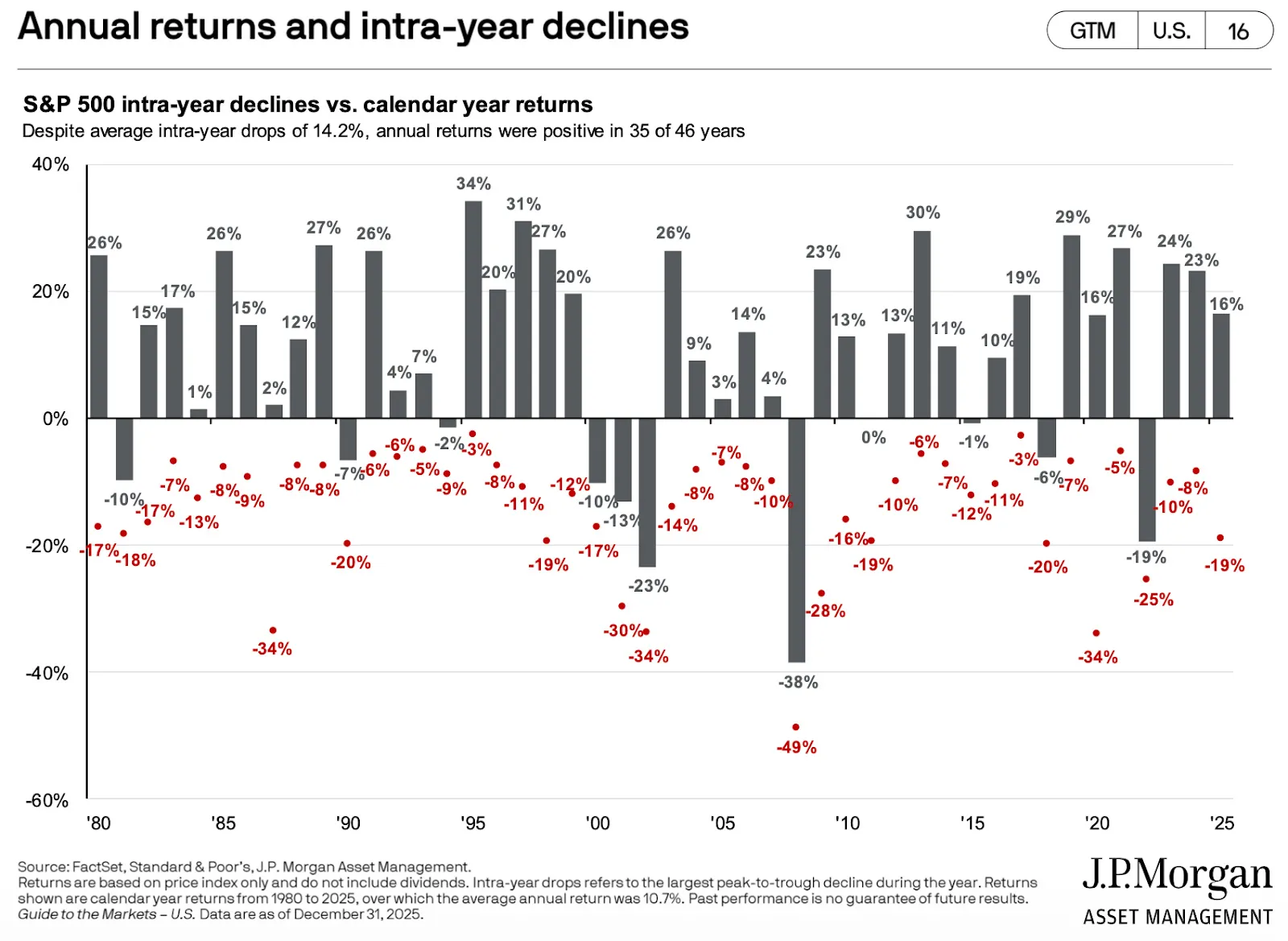
The mismatch is growth ambition outrunning risk appetite. The plan sounds great in a meeting. Then the first ugly stretch hits and suddenly time horizons start feeling negotiable. When the portfolio is down 25–35%, do you stay invested—or do you start reaching for a parachute?
Here’s the hard truth: volatility isn’t the real risk. Bailing out because of volatility is. Exiting when it’s scary and re-entering when it’s safe isn’t a strategy; it’s selling low and buying high.
Let’s zoom out for a reality check:
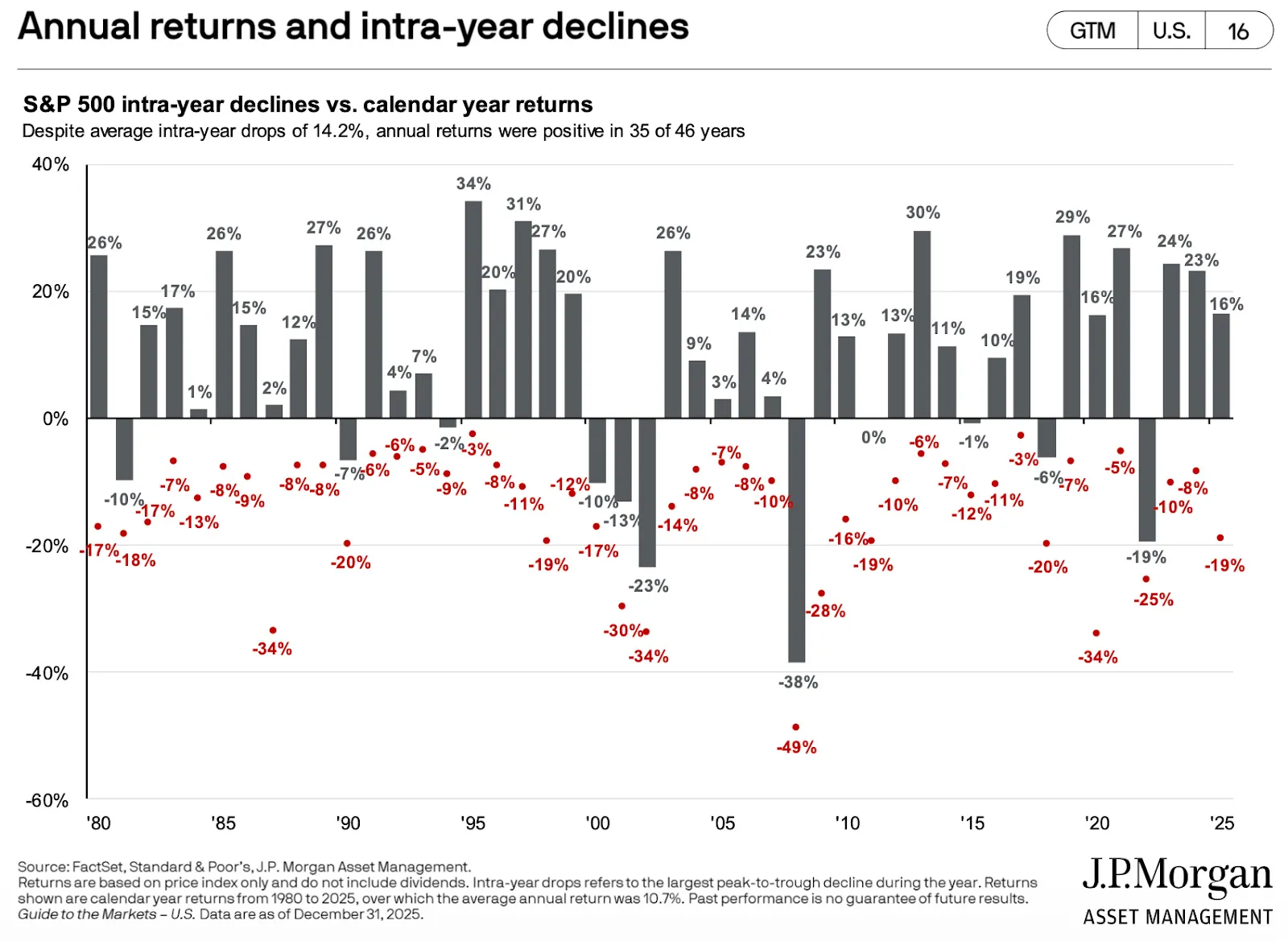
Source: JP Morgan Asset Mgmt via Tker
Most investors assume a great year should feel great. It often doesn’t. A lot of good years come with a few weeks that make you question your life choices. The difference between compounding and self-sabotage is what you do in those moments.
Sometimes the problem isn’t your stomach lining: it’s your timeline.
2) You need the money soon
This one is less about fear and more about math.
A growth portfolio is built for distance. If you’ll need a meaningful portion of this capital in the next couple of years—home purchase, tuition, a business buy-in, a tax bill—then your net worth is at the mercy of the morning headlines. That’s not a market problem; it’s a wealth management problem.
Ask yourself: what’s the earliest date you might need a large chunk of this money? And if markets are down at that moment, do you have choices, or do you have obligations?
Zoom out and the market looks like a neat story: up and to the right. Zoom in and it’s a mess.
Source: Seeking Alpha
That’s manageable when you can wait, and miserable when you can’t. With a sufficiently short time horizon, volatility stops being a chart problem and becomes a life problem. You don’t get to wait for a recovery when the rent’s due on Tuesday.
But a twenty-year horizon won’t save you from a twenty-minute impulse to 'fix' what isn’t broken.
3) You want a lot of action
Some investors equate activity with competence. More trades, more tweaks, more “doing something” must mean more value… right?
Not necessarily. In investing, action often comes with two predictable side effects: taxes and regret.
Our edge, when we have one, comes from selection, sizing, patience, and avoiding unforced errors. Sometimes the most valuable investment advice we provide is to do nothing at all. If you want a high-touch trading experience, constant tactical shifts, or a portfolio that changes every time the news changes, we’re not a fit.
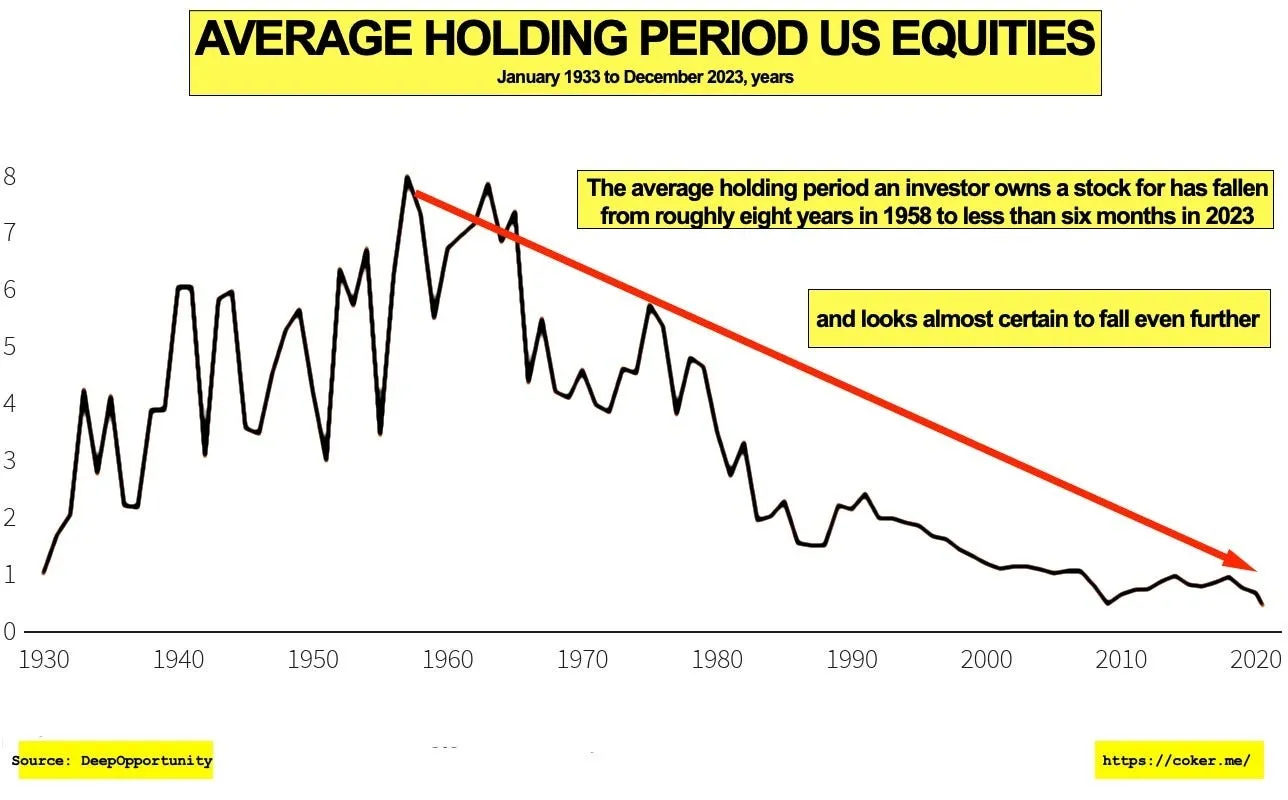
It’s also worth noticing what’s happened to investor behaviour more broadly:
Source: Dave Coker
The average holding period for U.S. equities has collapsed—from years to months. A quick glance at the headlines confirms that humanity didn’t suddenly get smarter. It just means the investing culture has been rewired for speed: more information, more noise, more “reasons” to trade, and more temptation to confuse motion with progress.
If you need constant activity to feel like something is happening, a long-term growth strategy will feel uncomfortable—often boring—by design. The question is simple: do you want an investor, or a play-by-play announcer?
Deep down, the itch to 'do something' is usually a hunt for control. Which leads us to the one client request that every honest Portfolio Manager must refuse.
4) You want guarantees
If you need guarantees, you’re shopping in the wrong aisle.
Markets don’t sign contracts. They are indifferent to your needs, deaf to your promises, and agnostic to your comfort. If someone promises you safety, check the price tag. It is usually paid for by amputating your upside.
So ask yourself: what are you actually trying to insure against? Losses? Volatility? Regret? And if you can’t tolerate uncertainty, are you really prioritizing growth—or sleep?
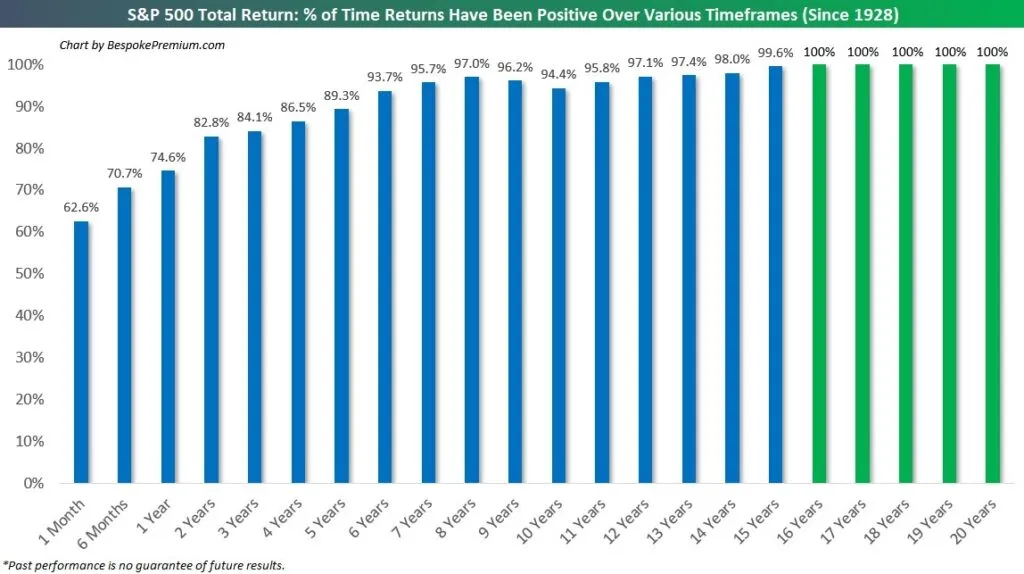
Here is the nuance: In the short run, the market is a voting machine run by maniacs. In the long run, it is a weighing machine for wealth management. No single year is guaranteed. But extend your timeline, and the maniacs lose their vote. The longer you hold, the more the price reflects the value.
Source: Bespoke Invest
That is the toll. You cannot chase the horizon while anchored in the harbor. If you need stability, we can direct you to dry land. But do not ask us to chart an ocean crossing without rocking the boat.
Which brings us to the final reality check: the cost of competence.
5) You want premium outcomes for discount prices
We charge 2% of assets under management.
That will filter some people out. Good. We’re not trying to be the cheapest line item on a spreadsheet—we’re trying to be the right fit for people who want a serious growth investment mandate run with discipline.
You’re buying conviction when it’s hard, vigilance when it’s boring, and accountability when it matters. And we eat our own cooking: our advisors can’t buy securities that clients don’t already own. That alignment matters more than most people realize—especially in an industry where it’s surprisingly common for managers to have little or none of their own money in the products they sell.
Clients often arrive from the Big Banks believing they pay 1.5%. By the time we strip away the invisible fund fees and embedded costs, the all-in number is usually closer to 2%. That is a premium price for a generic product. If the results justified the bill, they wouldn’t be switching.
If you want a bargain-price portfolio with premium promises, we’re not your firm.
You’re probably a fit if this sounds like you
- You are building a legacy, not buying a lottery ticket.
- You want growth—and understand the ride won’t always feel good.
- You respect the power of discipline over the noise of activity.
- You want accountability, not an alibi.
Why Professional Investors Screen for Temperament, Not Just Assets
We turn people down for the same reason we manage risk: to prevent unforced errors. Taking on a client with mismatched expectations isn’t 'sales'; it’s putting a crisis on the calendar. We’d rather have a tough conversation today than a divorce during a drawdown.
When the fit is right, everything works better. The decisions get cleaner. The strategy has a chance to do its work.
If you want a long-term growth strategy rooted in a successful relationship—not a quarterly romance—let’s talk.