Why Smart People Spend Badly: Financial Planning for the Soul
By Matthew Lloyd (Director of Operations)
Reviewed and approved by James McKnight (Founder & CEO, Registered Portfolio Manager) — “The Prophet of Profit”

O hell, to choose love by another's eyes!
— A Midsummer Night's Dream, ShakespeareIt is jealousy, not love, that connects us with the farmyard intolerably.
— Howards End, E.M. Forster
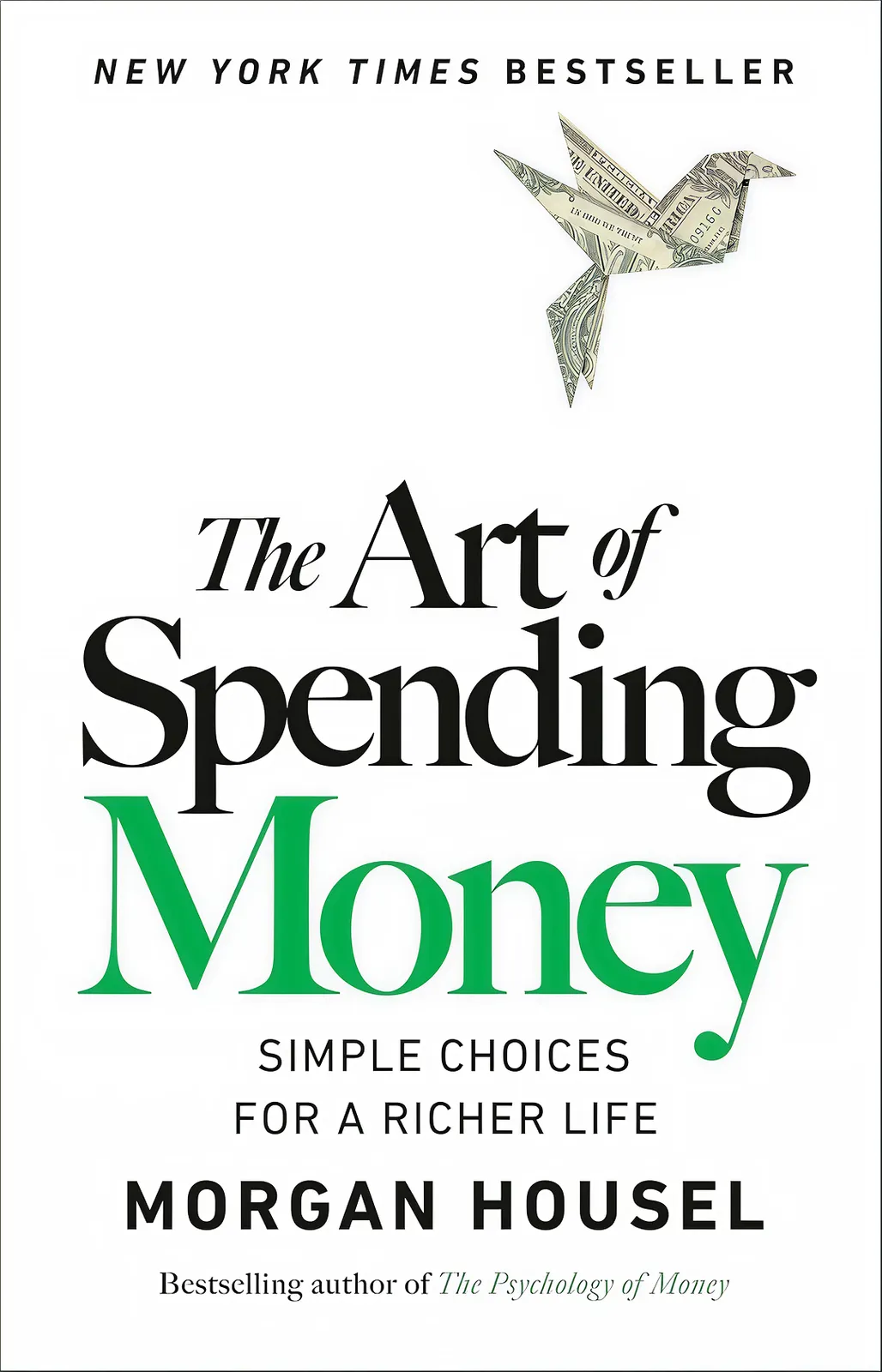
Source: Amazon.ca
As portfolio managers, we’ve found that the psychology of spending is often more complex than the math of making money.
Morgan Housel's The Art of Spending Money makes that case carefully and well. What makes it useful is not budgeting advice — there isn't much. What makes it useful is the central argument: spending is less a mathematical exercise than a psychological one. The arithmetic is simple enough to fit on a napkin. Spend less than you earn, save the difference, invest sensibly. Follow those rules faithfully and you will, in time, have money. What to do with it is another matter entirely — and the place where most investment advice falls silent.
That is where neat formulas lose their authority. Long-term growth answers the accumulation question. It says nothing about the spending one. Beneath almost every purchase lies a motive, and beneath the motive a story: fear of returning to poverty, hunger for status, compensation for overwork, envy dressed up as taste. A credit-card statement can be a surprisingly candid memoir.
Billy Markus, the software engineer Housel quotes, puts it plainly: "People are not rational. They are rationalizing." Human beings are capable of dazzling sophistication in the pursuit of desires they have not properly examined.
The Psychology of Spending: Simple Rules, Complicated People
The easiest spending advice in the world is also the most useless: be responsible. Fine. But responsibility explains little. Sensible people still spend lavishly, foolishly, and sometimes beautifully, often for reasons that are perfectly intelligible once you understand what the money is trying to do.
Housel notes that most debates about what's worth spending money on are "just people with different life experiences talking over each other." One person thinks business class is a vulgar indulgence. Another thinks it is the difference between arriving ready for work and arriving like a creased apology. One person sees a designer handbag and sees vanity. Another sees craftsmanship and pleasure.
Different lives, different math.
The real question is not whether other people would make the same purchase. It is whether the purchase serves a life you actually value. Most people inspect the object. The more useful inspection is of the appetite behind it.
Wealth Management: Buying Pleasure, Not Applause
One of Housel's sharpest ideas comes by way of Jennifer Breheny Wallace, who writes that "pride can be felt two ways: intrinsically, when you're authentically proud of yourself; and extrinsically, when another's opinions tell you how you should feel."
That distinction explains more spending than a conference of economists ever will.
Much bad spending is an attempt to purchase extrinsic pride. It is spending for display, for rank, for the brief warmth of reflected admiration. Beneath it lies the same sad commerce: asking your audience to tell you who you are. Public opinion is a fickle landlord, and it charges rent forever.
Housel mentions a study showing that if your neighbour wins the lottery, you become more likely to borrow money and go bankrupt. A wonderful, ugly little fact. Someone else's luck casts your life in a harsher light, and what felt sufficient last week now seems threadbare.
Extrinsic pride has no natural ceiling. There is always a rarer watch, a better address, some glossy stranger online who appears to possess both a supercar and serenity. Trying to keep pace with that theatre of comparison is like chasing the horizon. You can exhaust yourself without getting an inch closer.
Intrinsic pride is quieter, and far more durable. It comes from liking the life your money supports. A beautiful home, a well-cut suit, a memorable trip: any of these may be worth the cost if they deepen pleasure, ease, or meaning. The point is not to sneer at expensive things. It is to ask what role they are being asked to play. Are they enlarging your life, or just burnishing your reflection?
Emotional Spending: The Bonus as Bandage
One of Housel's best lines is also one of his shortest: "A lot of spending is gasping." That ought to be framed and hung in every luxury boutique.
He describes the lawyer or investment banker who works punishing hours, hates their life, then receives a bonus and spends wildly to compensate for what the money cost to earn. After months of fluorescent captivity and dinners eaten from cardboard, restraint is not what surfaces. Relief does. Or something that wants to pass for relief. Purchases become medals pinned to a wound.
The opposite is equally revealing. Tiffany Aliche describes suffering from "post-traumatic broke syndrome." She was broke for so long, and found it so painful, that even after becoming financially successful she struggled to spend.
These two look like opposites — one spends too easily, the other can barely spend at all — but they share a root. In one case, deprivation creates a frantic appetite. In the other, it leaves behind a permanent flinch. The money is new. The feeling is old.
Long-Term Investing Builds the Engine — But Who's Driving?
Modern culture runs on a quiet fantasy: that the next income bracket will fix what the current one hasn't.
Housel discusses Matthew Killingsworth's work on money and happiness, which matters because it dispatches two bad arguments at once. The first is that money does not matter. It plainly does: it buys privacy, convenience, time, medical care, and relief from a thousand grinding annoyances. The absence of money is not ennobling. It is often just exhausting.
The second is that money can heal what it did not wound. For people who are already unhappy, more income often does remarkably little. His summary is blunt: "If you're rich and miserable, more money won't help."
The core ingredients of a good life — friends, family, health, meaning, a clear mind — cannot be purchased, only earned. Money can support them, protect them, create space for them. But it is a poor substitute. Wealth may postpone certain reckonings. It rarely cancels them.
Smart Spending: Four Questions That Separate Intention from Impulse
So what does wise spending look like? Not an ascetic's hair shirt, nor a peacock's plumage. Something more personal and more demanding than either.
Before significant purchases — or before a lifestyle hardens into habit — a few questions are worth asking:
- Would I still want this if nobody could see it?
- Is this enlarging my life, or only my reflection?
- Is this a genuine preference, or social pressure dressed up as taste?
- Will I be glad later, or just gratified now?
These will not answer everything. But they will answer more than "Can I afford it?" Many expensive mistakes cleared that bar.
At Wealth Preservation Management, we help clients build wealth. But wealth is a tool, not a trophy. The point is not to admire the pile. It is to use it well: to spend with judgment, generosity, and self-knowledge, and to support a life that feels genuinely good. If you'd like a Vancouver investment advisor who thinks about wealth this way, we should talk.