All-Time Highs and Other Great Times to Invest
By Matthew Lloyd (Director of Operations)
Reviewed and approved by James McKnight (Founder & CEO, Registered Portfolio Manager) — “The Prophet of Profit”

“There is a tide in the affairs of men which, taken at the flood, leads on to fortune.”
— Shakespeare, Julius Caesar
“To do evil a human being must first of all believe that what he’s doing is good.”
— Aleksandr Solzhenitsyn
“The only value of stock forecasters is to make fortune-tellers look good.”
— Warren Buffett
Market Timing: When Being Right Still Means You're Wrong
History keeps a meticulous record of human overconfidence. Few entries are more humbling than the times investors thought they could time the market. But “stay invested and patient” doesn’t make for great headlines. “Impending crash!” does—and lately it’s been doing a brisk business.
The headlines may be new, but the story isn’t. On October 19, 1987, now known as Black Monday, the S&P 500 fell 20.4% in a single day—the largest one-day drop in U.S. history. Investors duly rushed for the exits. Yet, by December, the S&P 500 had clawed back nearly all its losses, finishing the year up 2%. The economy never entered recession.
A decade later, Federal Reserve Chair Alan Greenspan warned of “irrational exuberance”—a polite way of saying that stock prices were detached from reality. If you’d sold after his speech, you’d have missed one of the greatest rallies ever: the S&P 500 more than doubled before the dot-com bubble finally burst. Even the market’s post-crash low in 2002 was still higher than when Greenspan gave his warning.
The market humbles prophets, but it never runs out of believers.
A Handful of Days, a Lifetime of Gains
One reason market timing is such a consistent loser is that markets don’t distribute their gains evenly—they hoard them in a handful of extraordinary days.
The market’s bounty often comes in sudden bursts, like rain in the desert. Miss the downpour, and you’re left with dust.
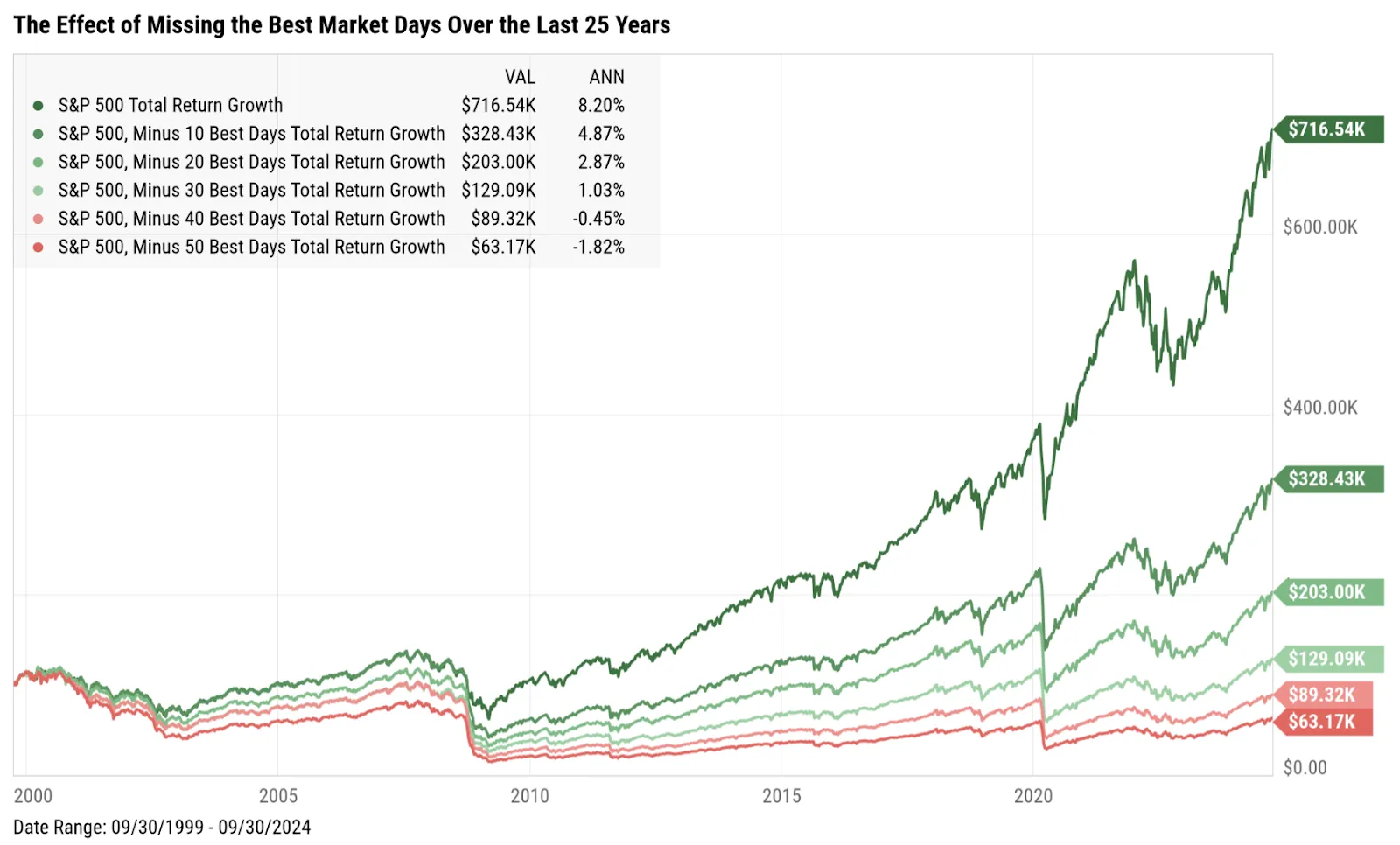
From 1999 to 2024—a 25-year stretch that included the dot-com crash, the 2008 financial crisis, and the COVID panic—the S&P 500 Total Return (USD, dividends reinvested) delivered 8.2% annually. Not spectacular, but solid.
Now imagine you missed just the 10 best trading days during those 25 years. Your return drops to 4.87%—a 40% haircut. Miss the best 30 days and you're left with a pathetic 2.4%, barely keeping pace with inflation.
And here’s the cruel twist: those “best days” often arrive in the middle of the worst weeks, when cash feels safe and courage feels foolish.
But you don’t have to predict the next best day. You just have to be there when it happens.
Source: Journey Wealth
The Fear of Heights: Hidden Opportunities in Record Markets
Most investors can’t imagine the future because they’re too busy remembering the past. At new highs, they stop believing in what could be and start mourning what might have been. And Herman Melville said it best: “the might-have-been is but boggy ground to build upon.”
This backward glance feeds the most quoted—and least practiced—investment strategy in history: buy low, sell high. It sounds great in theory, like efficient markets or communist utopias. In practice? Not so much.
All-time highs feel dangerous, like standing too close to the edge of a cliff. But what if they’re not warnings at all, but milestones? What if buying at all-time highs isn’t reckless—but rational?
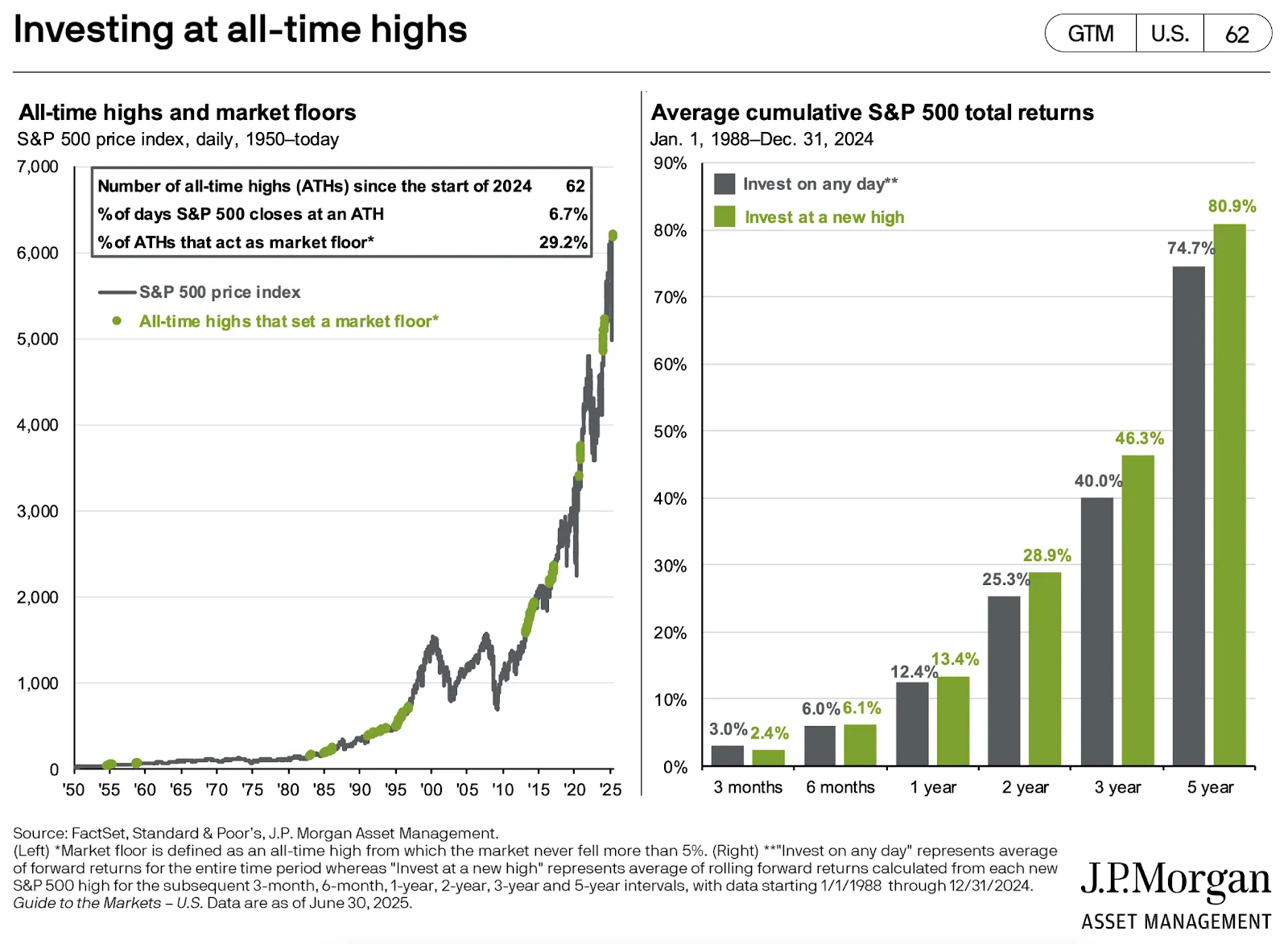
History has a delightful habit of rewarding optimists. Since 1988, investors who bought at all-time highs have earned 13.4% on average over the following year, compared with 12.4% for those who invested on any ordinary day. Stretch that to five years, and the gap widens—80.9% versus 74.7%:1
Source: JP Morgan
1Data reflect historical total returns (in USD) for the S&P 500 Index (1988-2024), excluding fees, taxes, and transaction costs. The index itself isn’t directly investable, and past performance doesn’t guarantee future results.
Five-Month Rallies: The Statistics of Staying Bullish
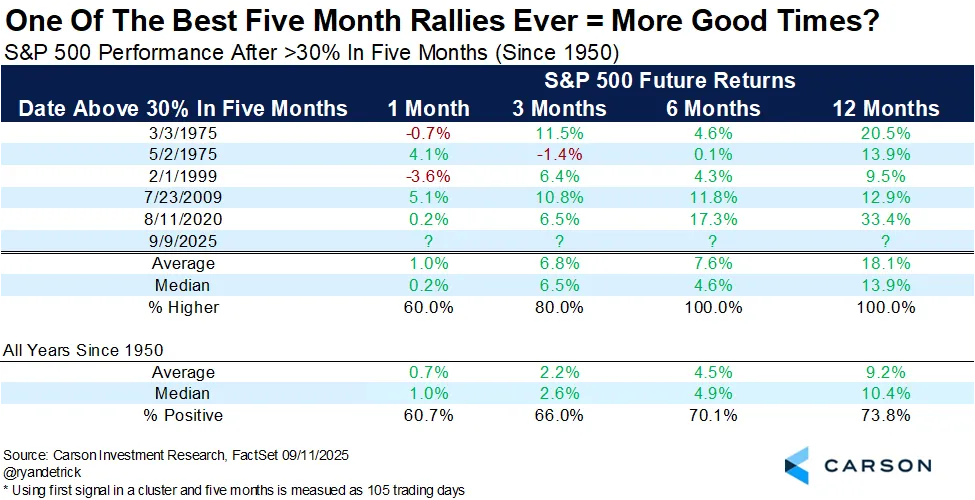
Ever since that grand immolation of shareholder value known as “Liberation Day,” markets have been on a tear. Much to the dismay of the doomsayers, a five-month winning streak in the S&P 500 has historically signaled strength, not exhaustion. Over the following year, returns have tended to remain solidly positive—18.1% on average:1
Source: Carson Group
Momentum, it turns out, isn’t a mirage—it’s often the market’s way of saying optimism still has room to run.
1Indexes aren’t directly investable and, as always, your results will differ. What matters isn’t the precise numbers, but the broader historical trend.
Upward and to the Right: Earnings Endure, Crises Pass
If short-term market movements are random noise, more likely to exasperate then enlighten, what can you count on? The steady, grinding, compounding growth of corporate earnings.
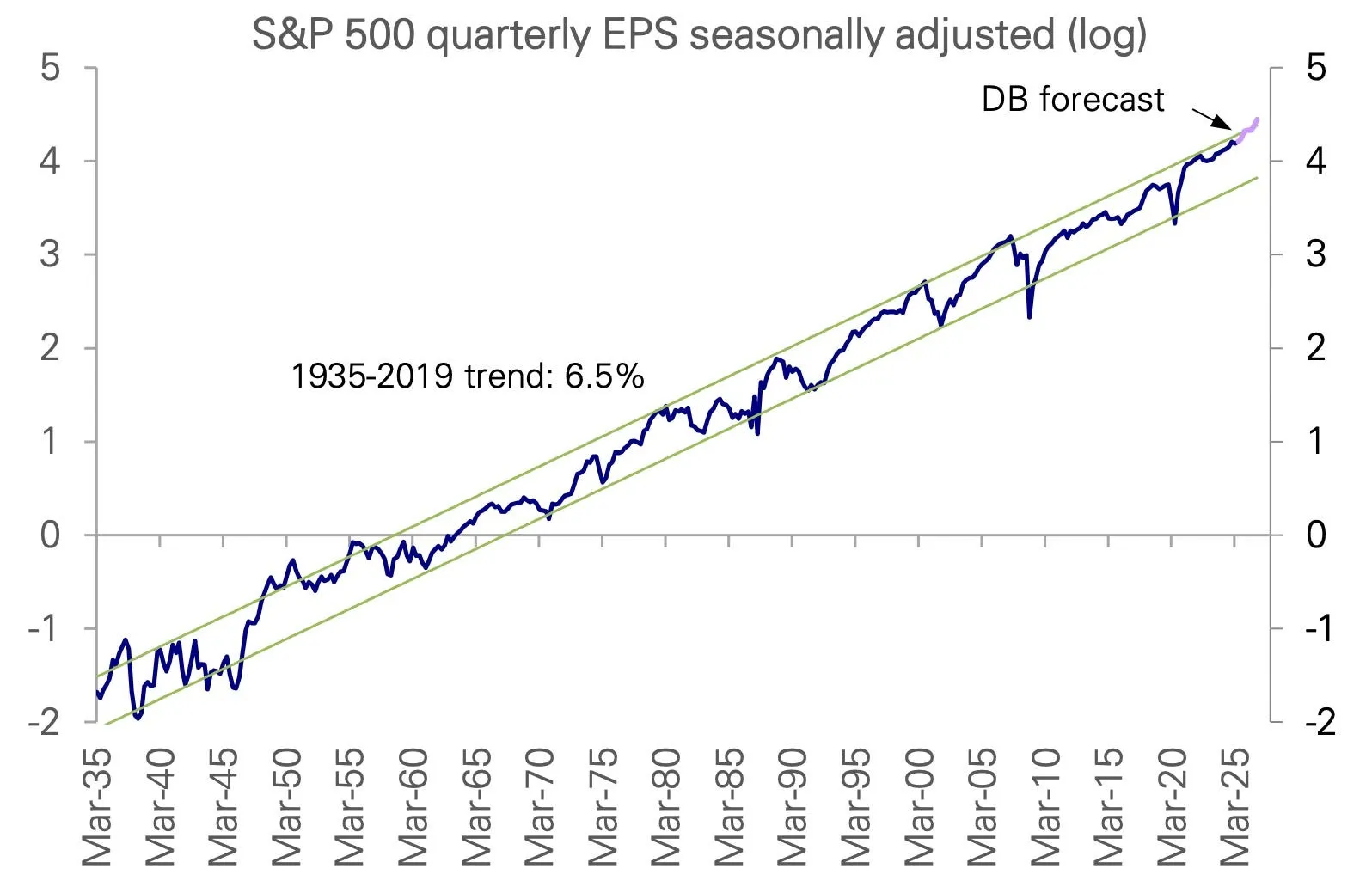
Look at seasonally adjusted quarterly earnings per share over the decades. Through world wars, recessions, bubbles, and crashes, the trend line is remarkably consistent—upward and to the right:
Source: Deutsche Bank
Quarterly adjusted EPS marches upward over decades, interrupted but never derailed.1 That resilience has made returns increasingly reliable over the long term: since 1928, the S&P 500 has delivered positive returns
- 63% of the time over one month,
- 75% over one year,
- 89% over five years,
- 94% over ten years, and
- 100% over sixteen years.
One hundred percent. Let that sink in. If you'd invested at any point since 1928 and held for 16 years or longer, you made money. Every. Single. Time.2
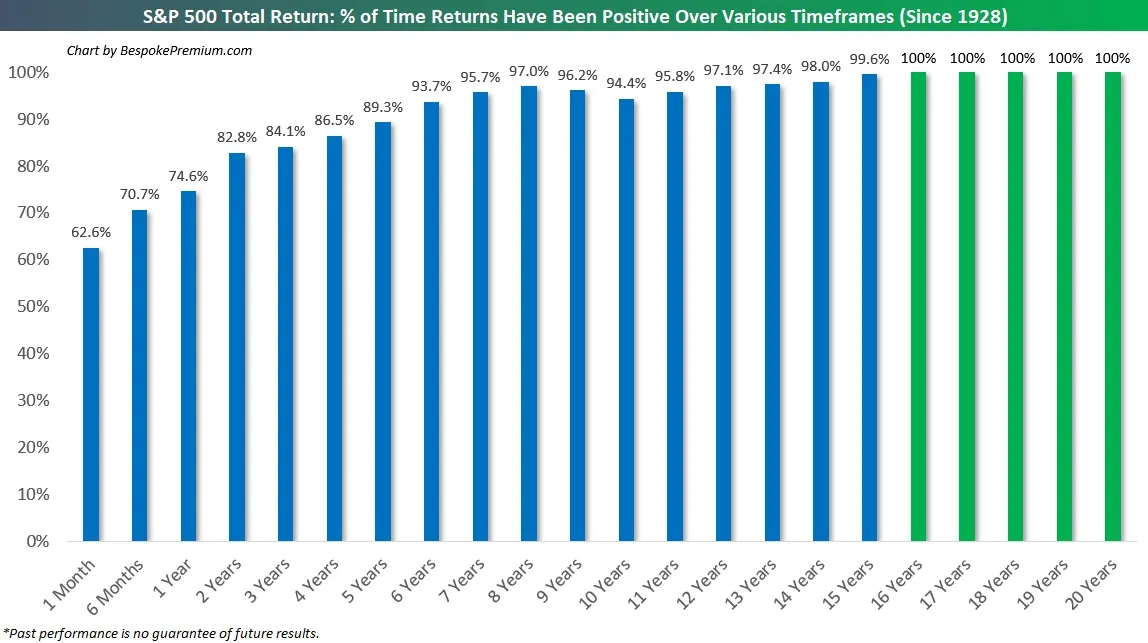
Source: TKer
1Continued earnings growth is not guaranteed in the event of World War III, asteroid strike, alien invasion, or comparable extinction-level scenarios.
2This is simply to highlight the long-term relationship between time horizon and positive returns. Data reflect historical total returns (in USD) for the S&P 500 Index (1928–2024), excluding fees, taxes, and transaction costs. The index itself isn’t directly investable, and past performance doesn’t guarantee future results.
Stay Invested. Grow Wealthy.
Market timing is seductive. It promises control in a chaotic world, the illusion that you can outsmart the crowd and sidestep disaster. But as legendary investor Peter Lynch once said: “Far more money has been lost by investors preparing for corrections, or trying to anticipate corrections, than has been lost in the corrections themselves.” Study after study supports his view.
At Wealth Preservation Management, we don't waste time predicting the next correction or guessing when the rally will end. We stay invested in high-quality companies, hold them through the noise, and let compounding do its work. Our Growth Model Portfolio has delivered an 18.15% compound annual growth rate (CAGR) from June 30, 2017 to December 31, 2025—not by being clever market timers, but by being disciplined long-term investors.
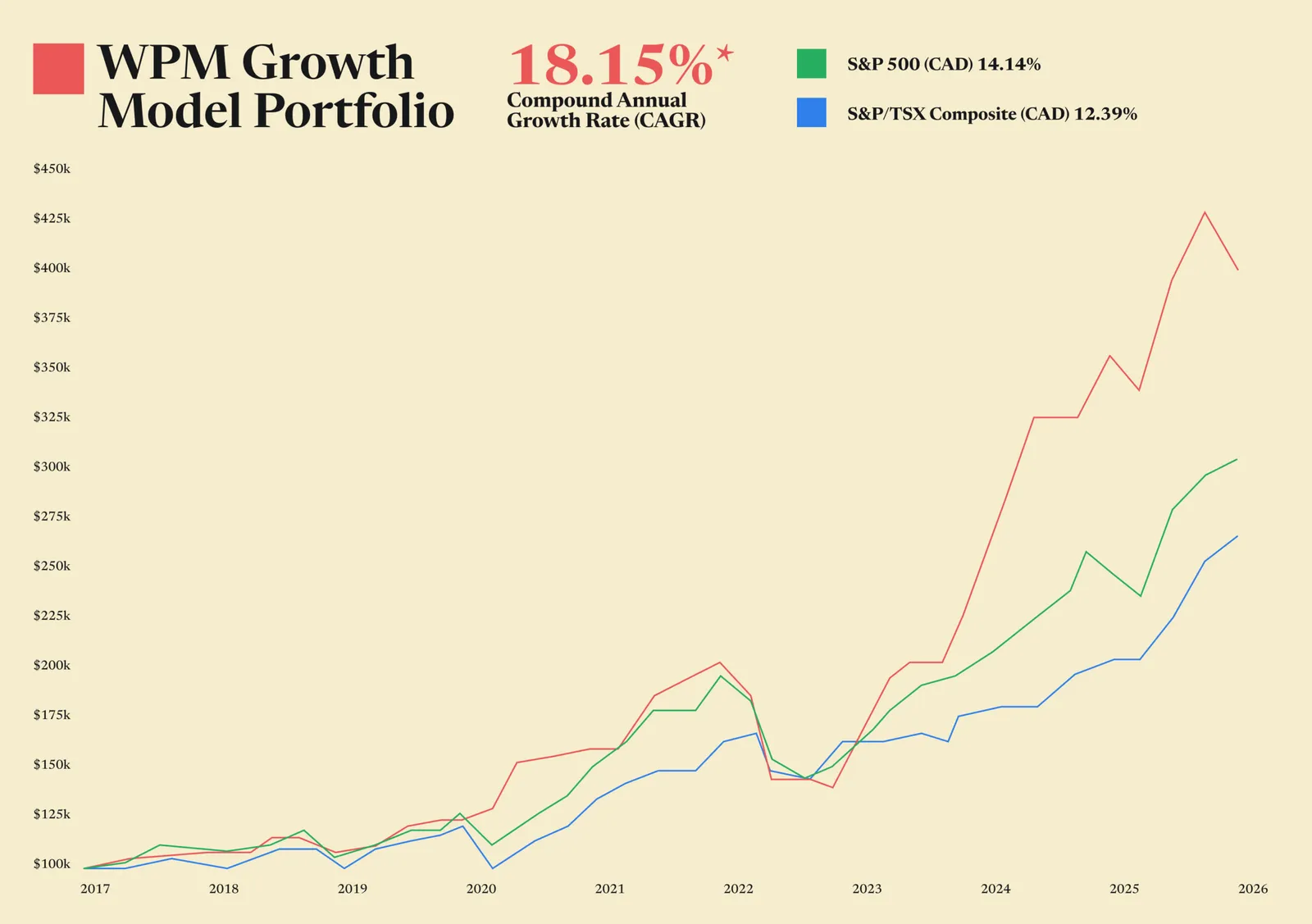
*CAGR independently recalculated by DeVisser Gray LLP. Click here for their report. Return is shown in Canadian dollars, gross of WPM's 2% fee. Past performance doesn't guarantee future results. Investing involves risk, including the possibility of losing money. WPM was registered with the BCSC in March 2023, though the same portfolio manager, James McKnight, has managed the Growth Model Portfolio continuously since inception. Details on benchmark selection here. Details on performance calculations here.
The market rewards patience, not prophecy.
Buy what you believe in, then get out of your own way.
Contact us today to learn how we can help you stay invested—and grow your wealth.
Ka-ching, the check is in the mail.