How to Invest When the Sky Is Always Falling
By Matthew Lloyd (Director of Operations)
Reviewed and approved by James McKnight (Founder & CEO, Registered Portfolio Manager) — “The Prophet of Profit”

“Cowards die many times before their deaths;
The valiant never taste of death but once.”
—Julius Caesar (Shakespeare)
“We have been and will always be totally unsuccessful in our attempts to repeal the law of supply and demand … we might as well try to repeal the law of gravity.”
—In the Realm of Hungry Ghosts (Gabor Maté)
The Market Rewards Patience, Not Panic
Bad news never goes out of season. The latest disaster du jour is the “AI bubble.” A few sleeps ago it was the dreaded post-COVID hard landing. Give it a week—there will be a fresh catastrophe to look forward to. Headlines arrive daily; the miracle of compounding runs on a slower clock. One is noise. The other is wealth. As Daniel Kahneman put it, nothing in life is as important as you think it is when you’re thinking about it.
That urgency to act is powerful—and usually counterproductive. It’s how investors turn volatility into self-harm, as we showed in The Best Investment Decisions Are Often the Ones You Don’t Make.
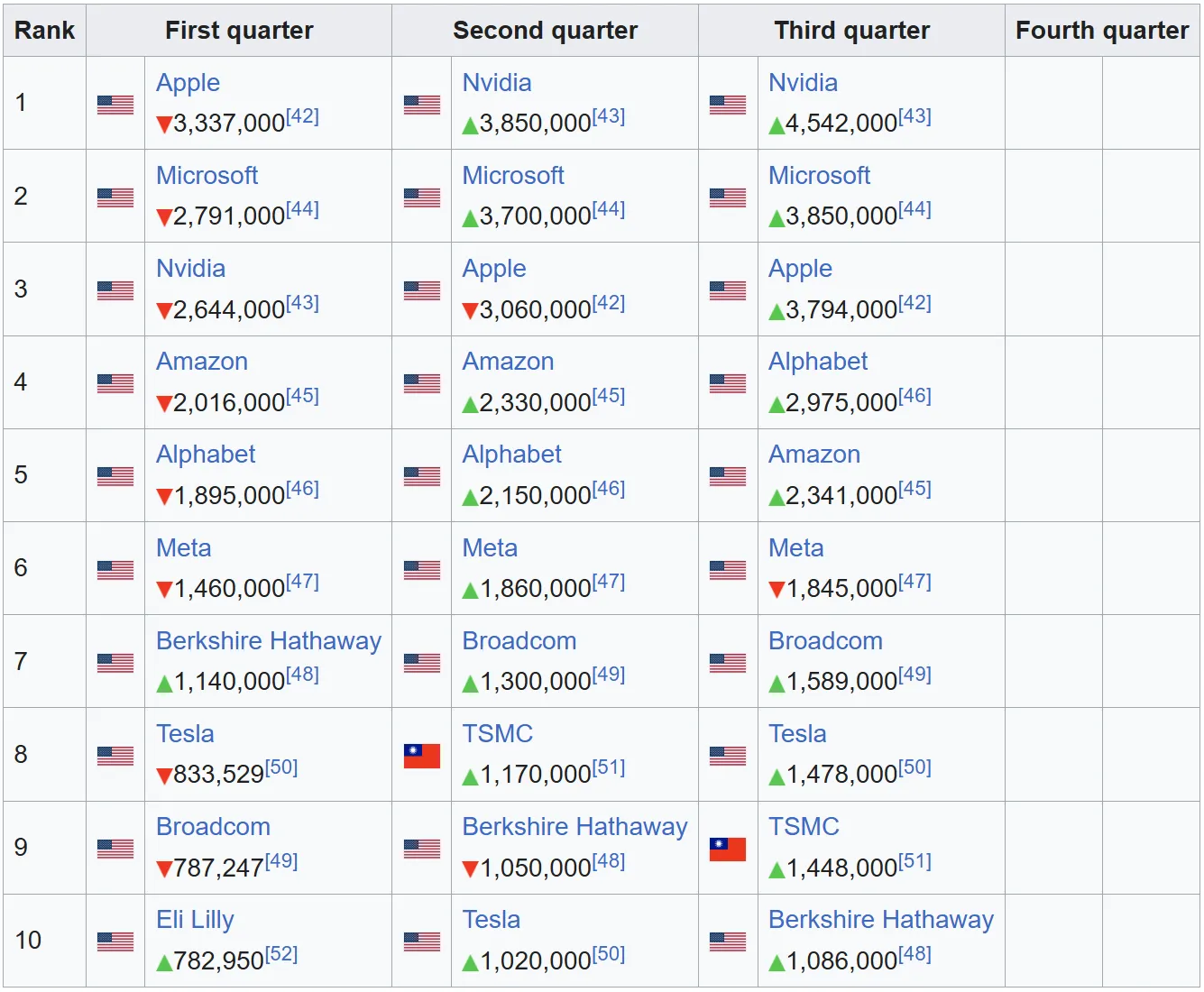
At Wealth Preservation Management, we’re irrepressible optimists, and not because we ignore risk—we’ve simply read the trend line. We carry more computing power in our pockets than NASA had for the moon landings, and we use it to hail a car, settle a bill, or translate a foreign language in real time. The “trillion-dollar company” that once sounded mythical is now a club with plenty of jackets:1
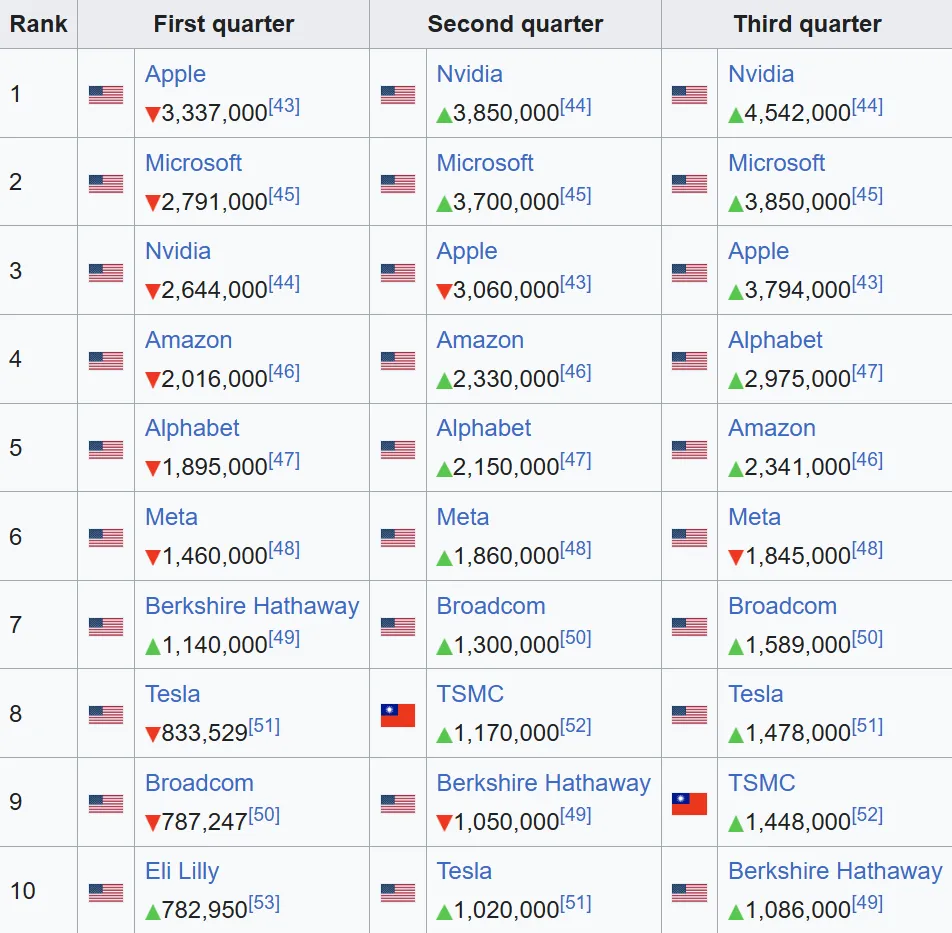
Source: Wikipedia
Profit machines are being built—quietly, relentlessly—across software, semis, biotech, energy, space. The opportunity set isn’t shrinking; it’s compounding.
Look past the lightning flashes and the market’s long-term forecast is simple: more buyers, durable cash flows, fewer shares. Everything else is passing weather.2
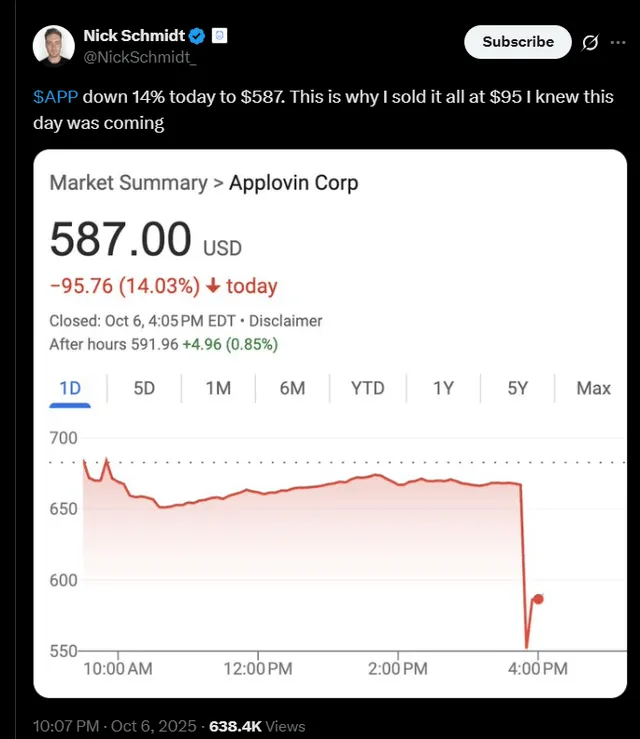
Source: Nick Schmidt
1As of Oct 16, 2025. USD.
2We’re talking about big-picture trends here, not giving advice. Your investment decisions should always be made with your advisor—and hopefully they’re as excited by the future as we are.
Act I – Demand Sets the Plot in Motion
Three powerful currents are pushing capital into U.S. equities.
American Wealth: The Tide Keeps Rising
Real U.S. net worth keeps rising, which means each cycle begins with more wealth looking for a home. This rising tide doesn’t read op-eds; it flows into pensions, retirement plans, and investment accounts.
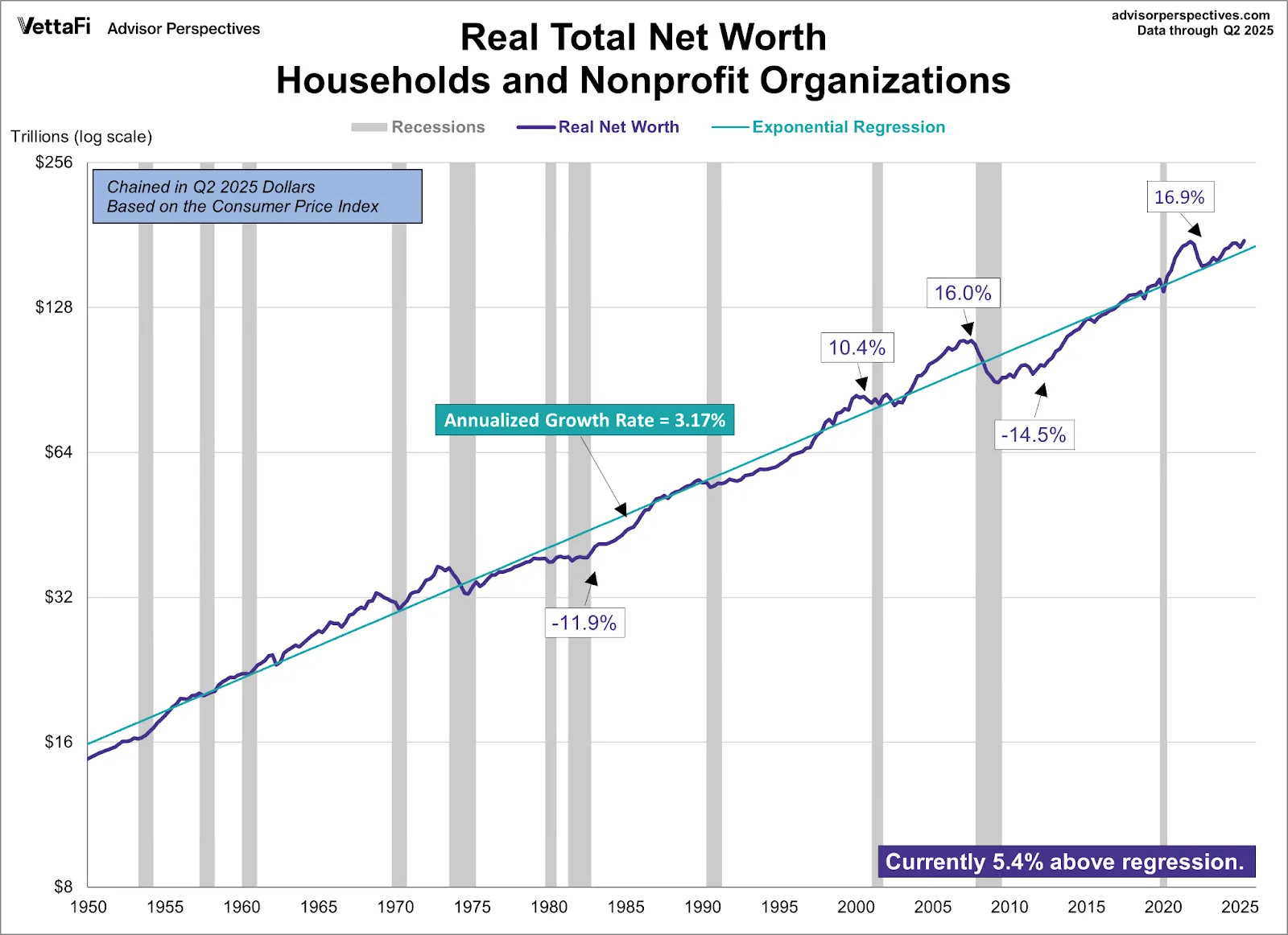
Source: Advisor Perspectives
The Tide Isn’t Just Rising—It’s Buying
Americans aren’t just richer—they’re risk-on, steering more of that wealth into equities:
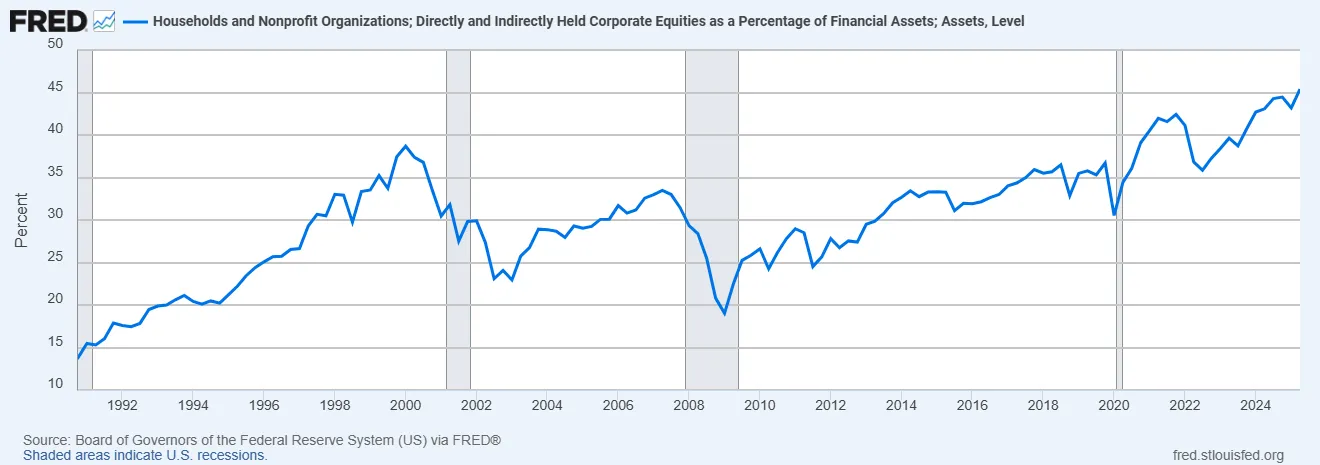
Source: FRED
Everyone Has an Opinion. Capital Has a Preference: America.
Not only are American households and nonprofits loading up on equities—it’s a global phenomenon. When the world shops for earnings power, liquidity, and the rule of law, it tends to land in U.S. markets. Foreign ownership of those stocks has increased at a 13.2% compound annual growth rate (CAGR) from 1990-2024:
Source: Econovis
More buyers matter—and those currents feed the earnings engine.
Act II – Earnings Are the Engine
Capital follows cash flows. Prophets need not apply—just track the earnings per share as it marches up and to the right.1 That’s the weighing machine at work: millions of daily decisions—earning, investing, inventing—rolled into profits.
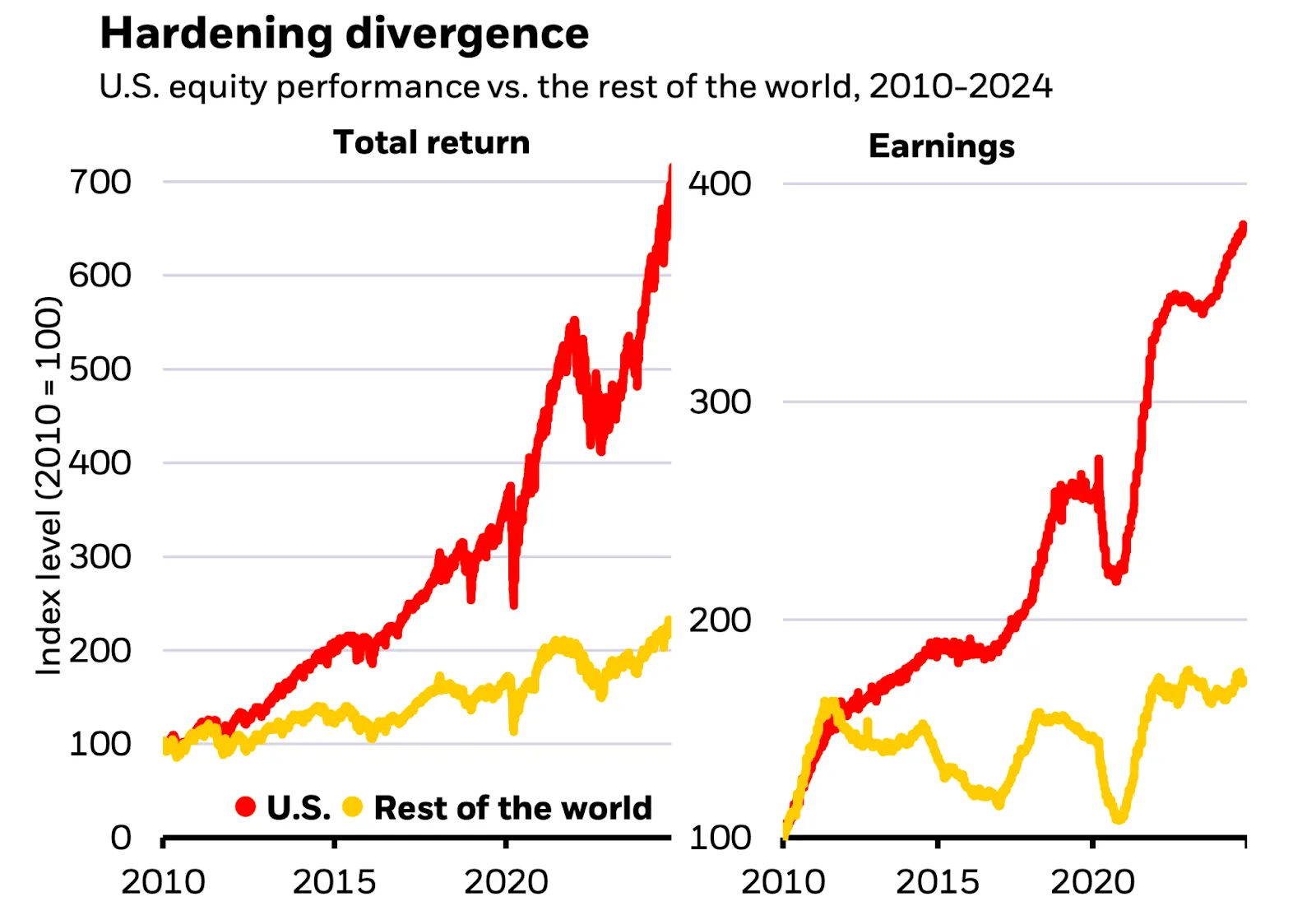
Source: Business Insider
Much to the joy of long-term investors, demand is up, profits are fat, and shares are increasingly scarce.
1Earnings growth isn’t a straight line—it climbs, it stumbles, but over time the direction is unmistakable: lower left to upper right.
Act III – When Less Becomes More
The market’s shelves are emptier than they used to be—shrinking from two sources.
Where Did All the Listings Go?
By 2024 there were half as many public U.S. companies as there were in 1996. Some went private, some got bought, some simply faded away. We’re less interested in the details than in the direction:
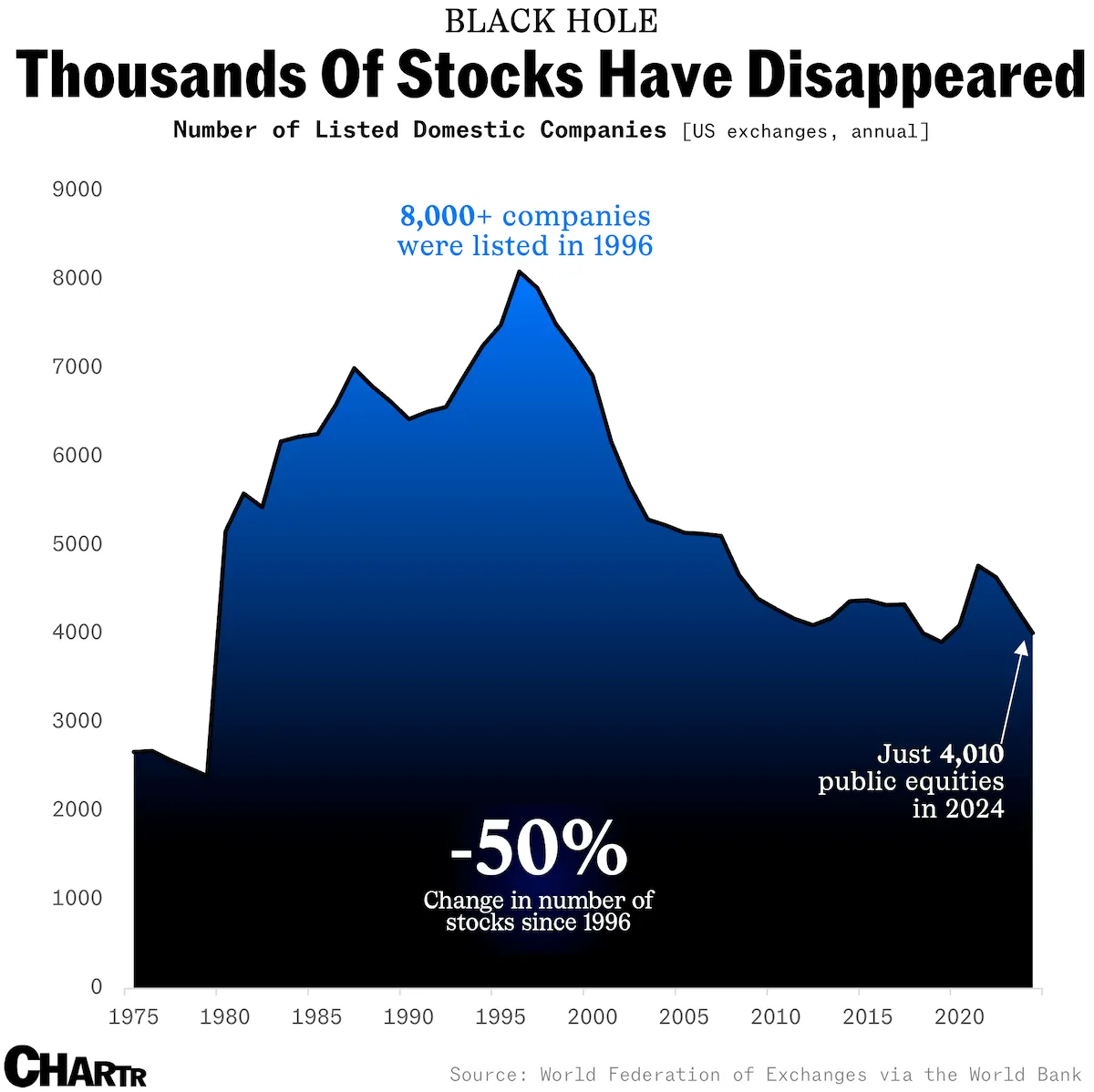
Source: Sherwood News
The market has shed half its listings since 1996, yet total value has multiplied over sevenfold—from $8.5 trillion to $62 trillion. Scarcity, it turns out, can be quite profitable.
Buybacks: Companies Open Their Wallets
Markets don’t pay you for total growth—they pay you per share. And companies are reducing their share counts faster than ever through record buybacks:
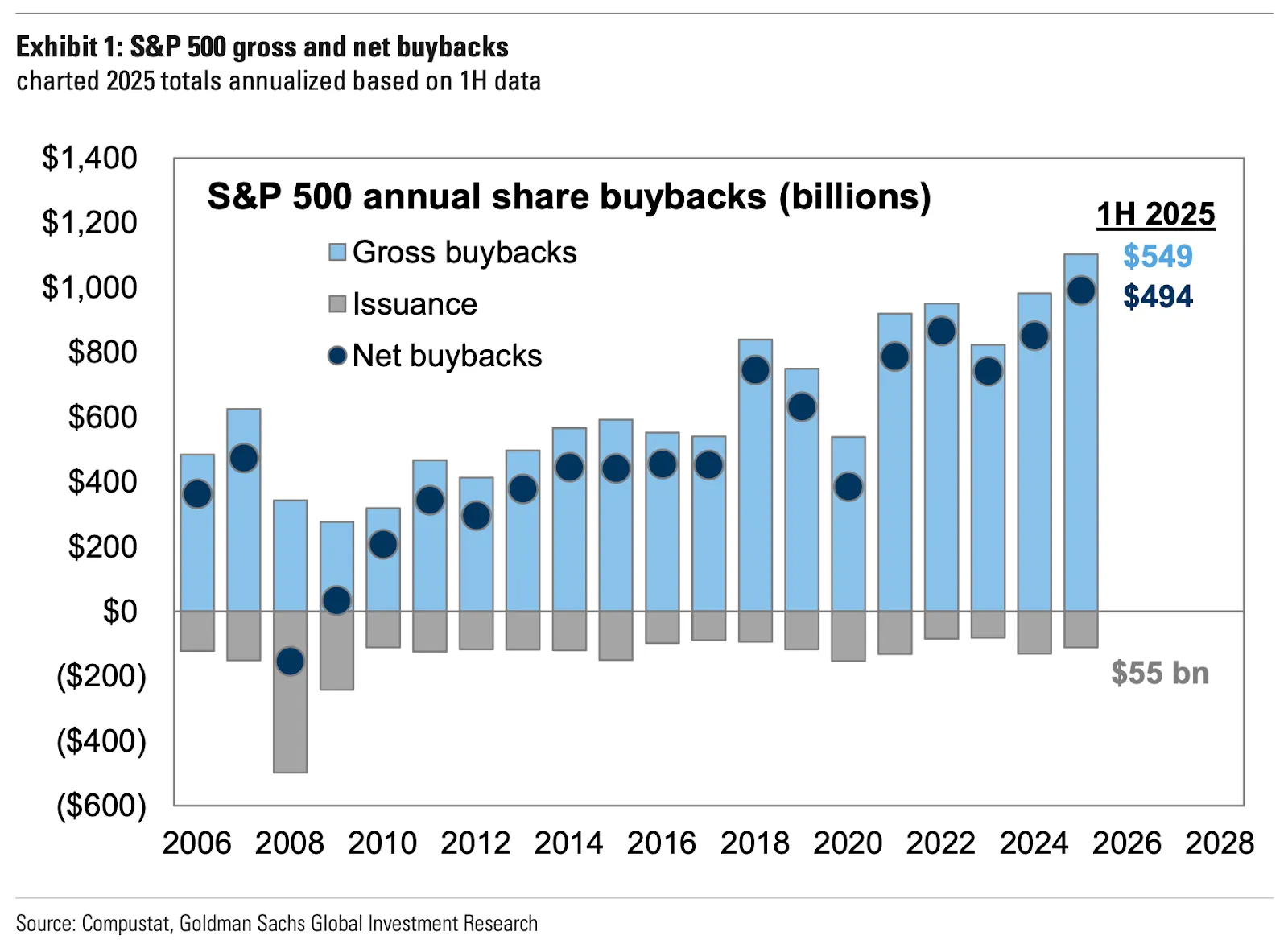
Source: Goldman Sachs
When earnings grow and shares shrink, patience gets paid. It’s not a headline, it’s a price mechanism—and it’s been working for decades without caring who’s watching.
1Rising earnings and fewer shares tend to reward patient investors over time, but that doesn’t mean every company—or every market—moves in a straight line. Markets rise and fall, sometimes sharply. We’re simply observing a long-term pattern, not forecasting outcomes.
Optimism: Still the Most Profitable Bias
We live in a time of wonders. Truly—a time of wonders. The tools we now take for granted would have looked like sorcery to our grandparents, yet they’re building real businesses that throw off staggering amounts of cash. We'll pound the table on this point: the opportunity set—as we see it—has never been broader, or more profitable, than it is today. And that’s what endures, long after the noise fades.
When someone breathlessly warns of the latest apocalypse, remember: no pessimist ever built a skyscraper, wired a continent, or launched a rocket. Progress belongs to the patient optimists: the ones who ignore the daily drama and keep showing up.
It’s the same philosophy that shapes how we build portfolios—steady, disciplined, and designed for decades, not news cycles—something we outline in more detail in our Services page.
If that sounds like you, we should talk. We’re Wealth Preservation Management in Vancouver—quietly optimistic, relentlessly long-term, and very comfortable letting the weighing machine have the last word.