Too F’ing Old? Tell That to My Portfolio
By Matthew Lloyd (Director of Operations)
Reviewed and approved by James McKnight (Founder & CEO, Registered Portfolio Manager) — “The Prophet of Profit”

“The truth is, I am only old in judgement and understanding.”
— Henry IV, Pt 2 (Shakespeare)
“Pfuhl was one of those theoreticians who are so in love with their theory, they forget that its object is to be applied in practice.”
— War and Peace (Leo Tolstoy)
The Patronizing Playbook for Aging Investors
Hello all, Prophet of Profit here. Allow me to begin with a confession: my industry often fills me with embarrassment.
Case in point: I recently attended a seminar titled “Investing for the Elderly.” (If that title alone doesn’t make you cringe, we may have nothing in common.) Six talking heads lined up to lecture us—two senior advisors, two senior regulators, and two senior lawyers. The consensus, as I understood it? That past a certain age, investors should sit quietly in the corner and accept that they’re “Too F’ing Old.”
I was 72 at the time, sitting right there in the audience. Seemingly invisible.
Their argument boiled down to two points about aging investors—both of which I found highly patronizing:
- Your money should be shifted heavily into “safe,” low-yielding bonds.
- Your ability to judge and accept risk declines, so you should largely avoid it.
My translation: Congratulations on retirement! Here’s a poverty plan disguised as prudence.
Sometimes the Real Risk Isn’t Volatility—It’s Poverty
Let’s be blunt. Do you have enough money to retire tomorrow and maintain your lifestyle until age 100? No? Few Canadians do.
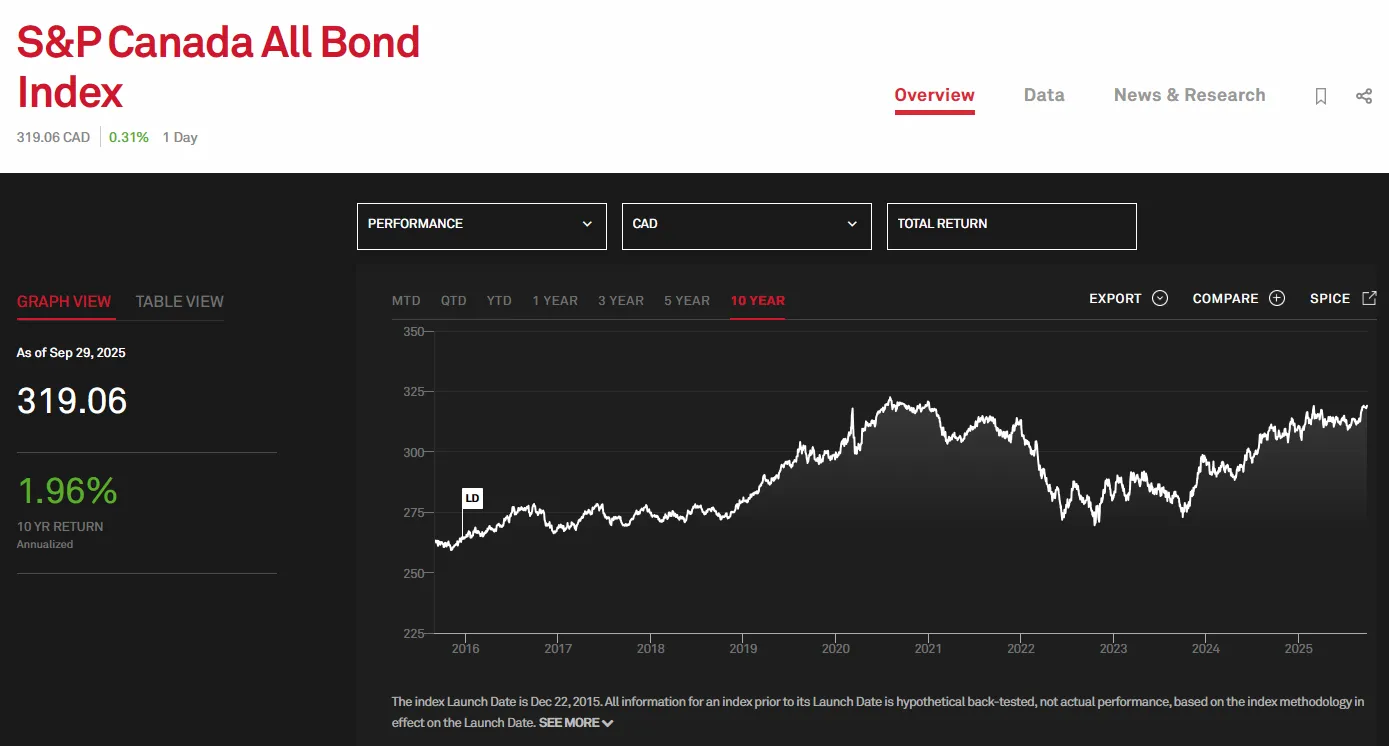
That, my friends, is the real high-risk scenario—as I see it. You need more money, yet the powers that be often recommend a portfolio strategy with historic returns that could leave you chewing dog kibble in your “golden” years. Why do I say this? Because in the past 10 years, the S&P Canada All Bond Index has returned a paltry 1.95% annualized (as of Sept 24, 2025).¹
1All data is for industry context only, not a direct comparison to WPM’s strategy or results. Past performance is history, not prophecy—and your results will differ.
Source: S&P Global
I recently reviewed a decade’s worth of returns for a prospect who’d been with one of the Big Five Banks. According to my calculations, after fees and inflation, the portion of their portfolio invested in bonds (about one-third) was generating an annual return of –0.84%. That’s right—one-third of their portfolio was effectively losing money month after month.
For the lawyers out there, let me be clear: this is only the experience of a single investor. Your experience may differ, and past performance doesn’t guarantee future results. That said, my personal experience reviewing bond performance for many investors suggests this outcome is far from unusual. And whether you’re losing around 1% per year, or making 1% (or gasp… 2%!)—ask yourself: is that really sufficient to fund your retirement?
60/40 Portfolio Returns By the Numbers
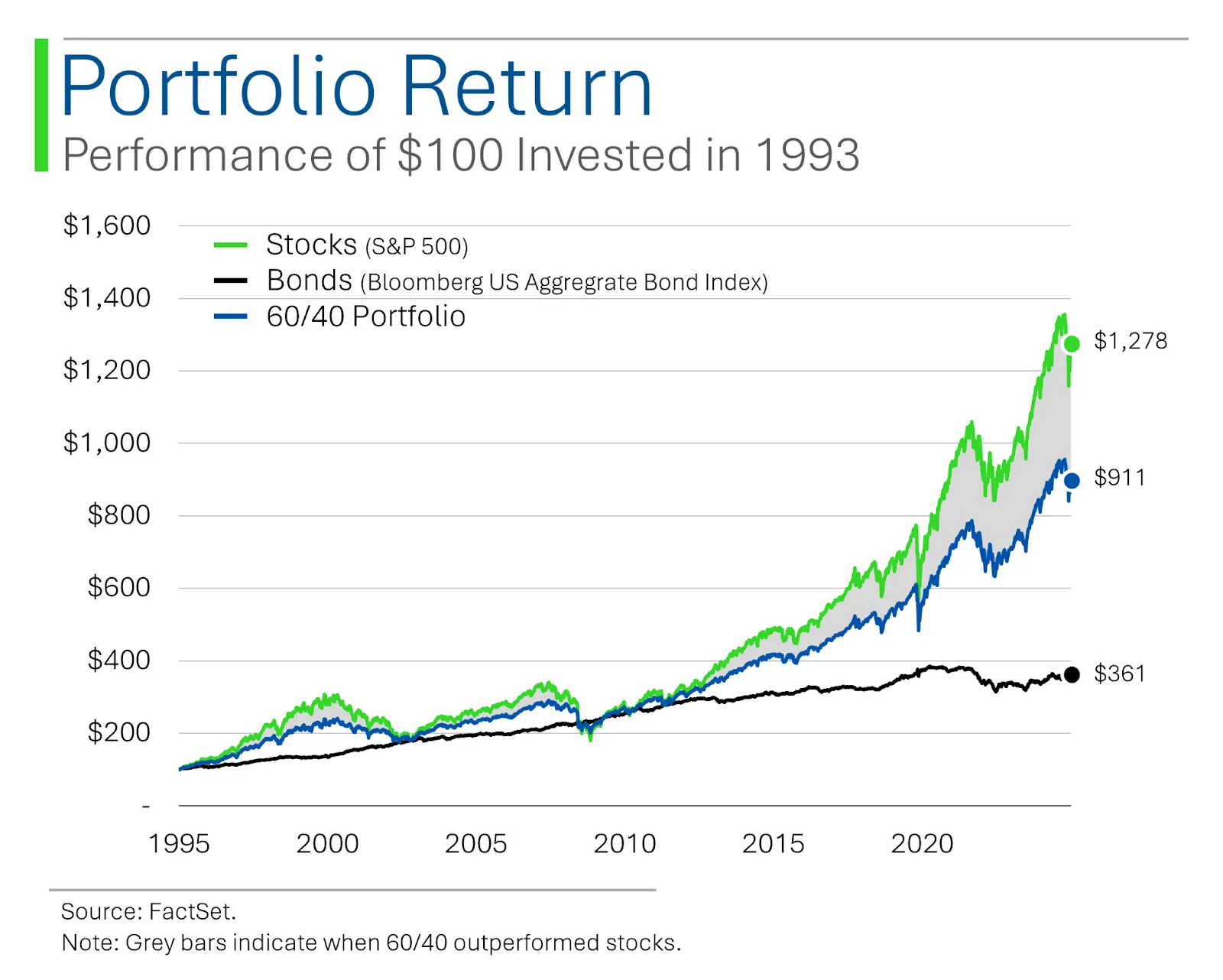
Let’s examine the numbers from a long-run perspective, comparing the S&P 500 (total return), the Bloomberg US Aggregate Bond Index, and a 60/40 portfolio (60% equity, 40% bonds) from 1993 to late 2024.¹
1All data is for industry context only, not a direct comparison to WPM’s strategy or results. Past performance is history, not prophecy—and your results will differ.
Source: Street Smarts
30 Years of Lost Opportunity
In the 30 years since May 2, 1995, the S&P 500 is up +1,178%, while the bond index is only +261%. Parking 40% of your money in bonds drags your return down to +811%—a 31% haircut compared to equities alone. Ouch.
How Often Does 60/40 Win? Not That Often.
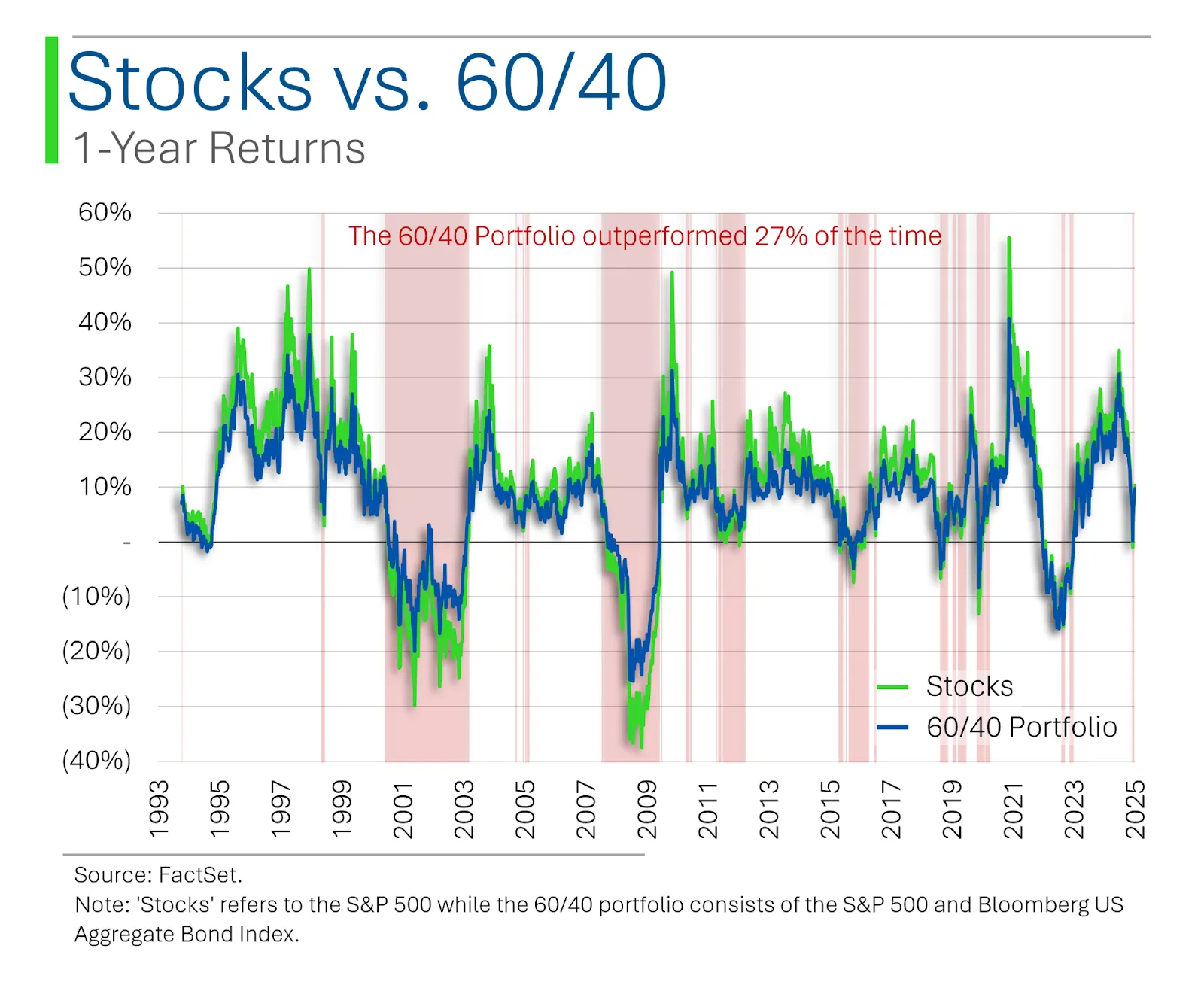
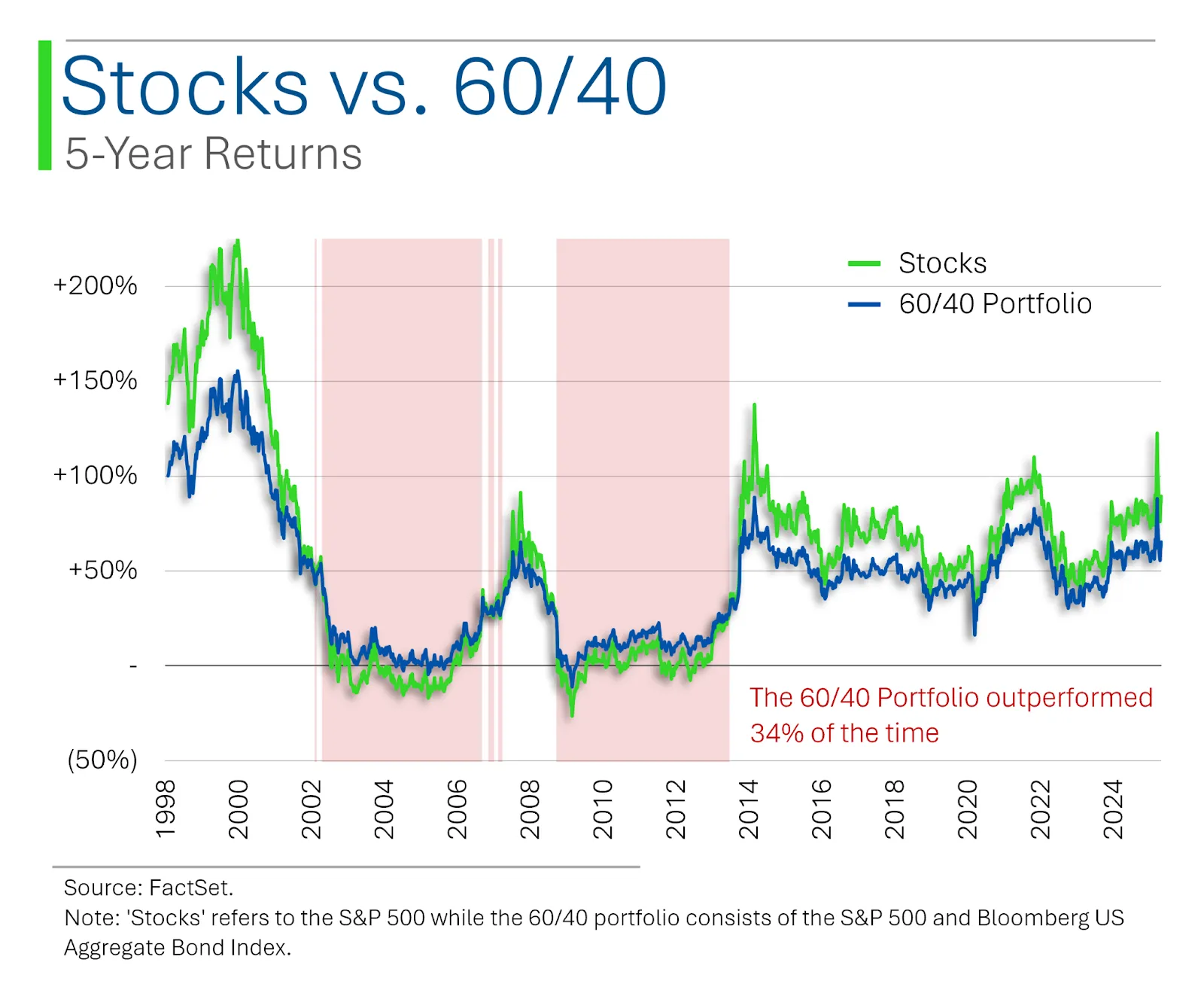
Let’s consider how often a 60/40 portfolio has outperformed the S&P 500 over different rolling time horizons.
1-Year Periods: The S&P 500 has outperformed a 60/40 portfolio 73% of the time.
Source: Street Smarts
5-Year Periods: The S&P 500 has outperformed a 60/40 portfolio 66% of the time.
Source: Street Smarts
How Much Does 60/40 Lose?
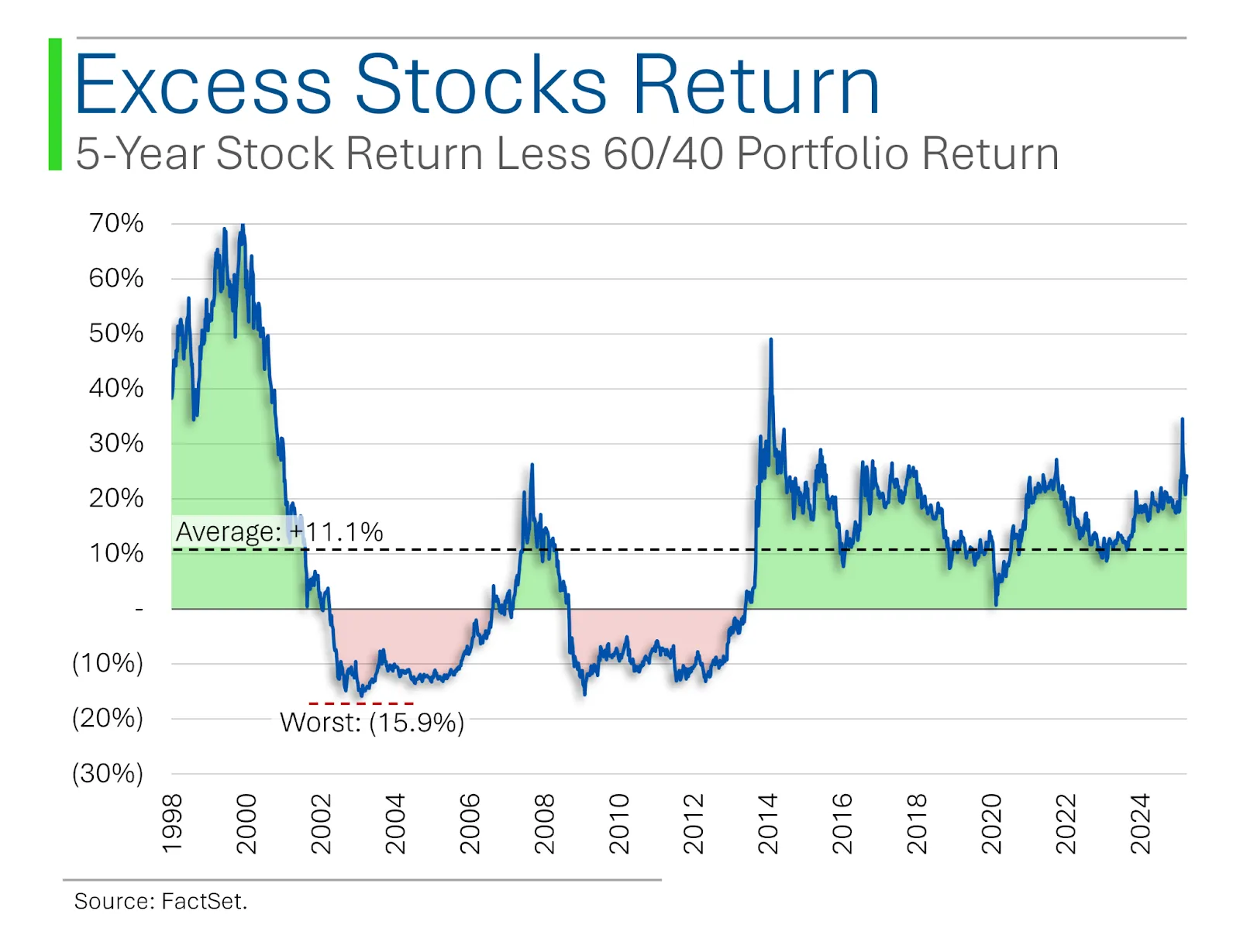
So, a stocks-only portfolio beats 60/40 roughly two-thirds of the time. But by how much? Over rolling 5-year periods, the S&P 500 has delivered an average 11.1% higher return than the 60/40 portfolio:
Source: Street Smarts
That’s not pocket change. On a $500,000 portfolio, that’s $55,000 a year left on the table. For many investors, that can be the difference between living well and losing sleep.
Why “Age-in-Bonds” Misses the Point
If your time horizon is longer than 5 years, and you don’t have to liquidate large portions of your portfolio for day-to-day expenses, then history suggests that the 60/40 portfolio sacrifices a lot most of the time just to save a little some of the time.1
Some advisors even recommend the “Age-in-Bonds” rule, which would put you at 70% bonds and 30% stocks at age 70. To me, that looks more like a recipe for running out of money than preserving it.
1Past performance is history, not prophecy. Your results will differ—so make your choices with an advisor who knows your situation.
The Real Risk: Outliving Your Money
These cookie-cutter bond allocations don’t reflect the reality many Canadians face. For many investors I’ve spoken with, the greatest risk isn’t short-term volatility—it’s running out of money.
Informed Risk, not Stupid Risk
Let’s be clear: I’m not advocating recklessness. I’m advocating informed risk in pursuit of wealth accumulation—because in my experience more money is safer than less.¹
Will markets fluctuate? Of course. They always do. But unless you’re forced to sell a large portion of your portfolio on a given Tuesday, those dips aren’t losses—they’re weather. Rain today, sunshine tomorrow. Bring an umbrella, not a panic attack.2
1Wealth accumulation isn’t for everyone. Investment decisions should always be based on your personal circumstances and made after a proper Know-Your-Client discussion.
2If you can’t stomach the swings, your allocation should fit your temperament—markets shouldn’t keep you up at night.
Performance vs. Platitudes
For over 20 years, I’ve found that it’s possible to grow my clients’ wealth significantly while still generating comfortable income.
Consider our Growth Model Portfolio: from June 30, 2017, to December 31, 2025, it has delivered a compounded annual growth rate of 18.15%. Not a hypothetical. Not a backtest. Actual client money:
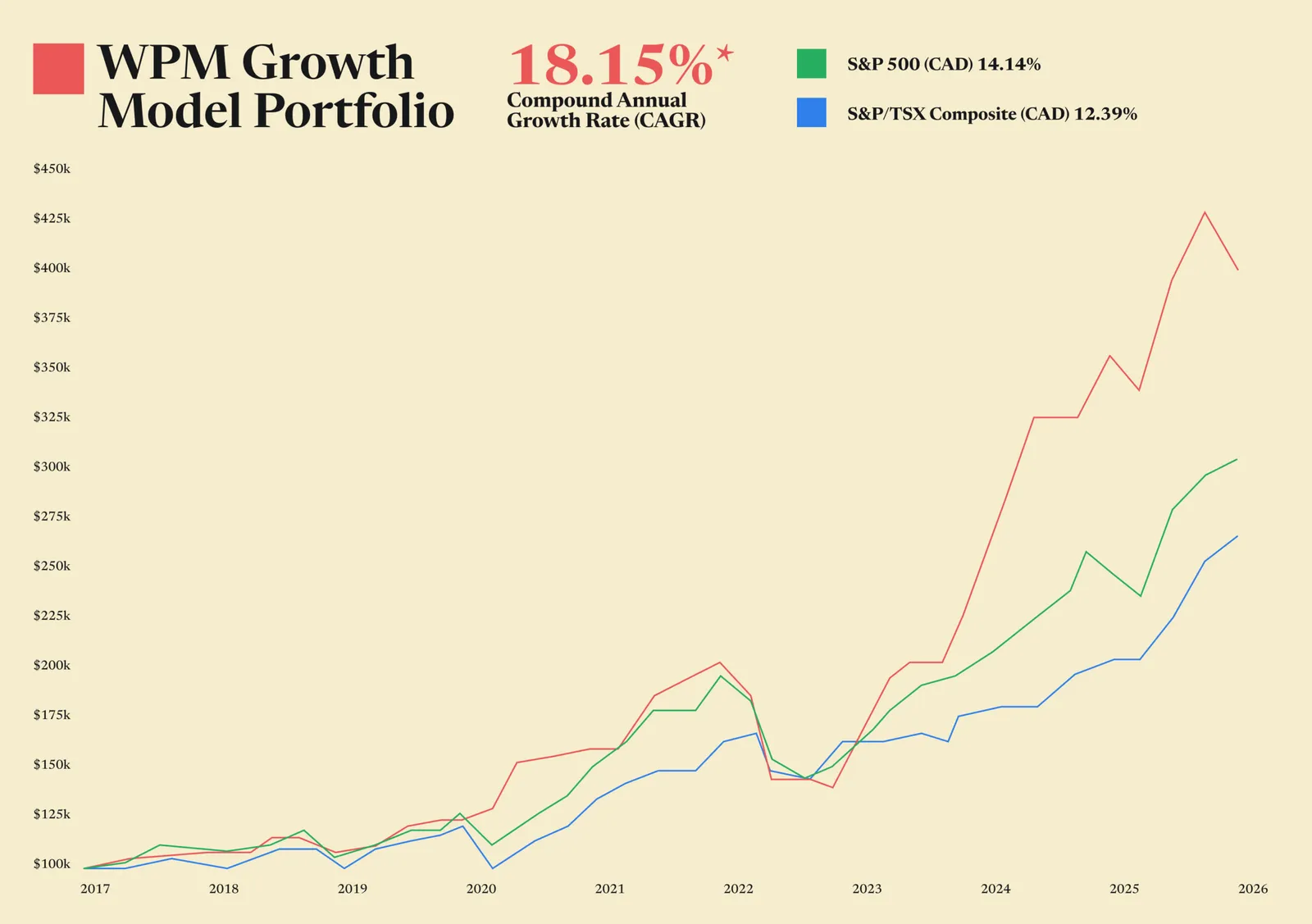
*CAGR independently recalculated by DeVisser Gray LLP. Click here for their report. Return is shown in Canadian dollars, gross of WPM's 2% fee. Past performance doesn't guarantee future results. Investing involves risk, including the possibility of losing money. WPM was registered with the BCSC in March 2023, though the same portfolio manager, James McKnight, has managed the Growth Model Portfolio continuously since inception. Details on benchmark selection here. Details on performance calculations here.
Are You Too Old? Try Too Wise.
The investment industry often prefers to pat investors on the head, shuffle their savings into bonds, and call it “suitability.” We prefer results.
Because you’re not too old—you’re too smart to settle.
So, if you want more than empty platitudes about “safety,” reach out. We’ll talk. And I promise: I’ll never call you “Too F’ing Old.”
Ka-ching, the check is in the mail.