Your Home Is A Lousy Investment
By Matthew Lloyd (Director of Operations)
Reviewed and approved by James McKnight (Founder & CEO, Registered Portfolio Manager) — “The Prophet of Profit”
"Disparaging those we love always detaches us from them to some extent. It is better not to touch our idols: the gilt comes off on our hands."
— Gustave Flaubert, Madame Bovary
Home Sweet Home: Comfort at a Cost
Your realtor gazes into your eyes and whispers breathlessly: "It's not just a house, it's an investment." Like all untruths, it comes wrapped in just enough sense to make it dangerous. Yes, homes appreciate. Yes, you will make some money. But what kind of returns are you sacrificing by ploughing everything into your home?
The Mathematics of Financial Heartbreak
Let’s attempt to demystify the choice between home ownership and renting from an investment perspective.
Scenario 1: Buy a Home
You purchase a $1,000,000 home with a 20% down payment ($200,000) and finance the remaining $800,000 over 25 years.
Historically, Canadian housing—after inflation, taxes, maintenance, and repairs—has returned about 1% per year. Let’s be generous and assume 4%, thanks to above‑average appreciation, lower costs, or perhaps divine intervention.
After 25 years at 4% growth, your home is fully paid off and worth about $2.6 million. Sounds good, right? But wait…
Scenario 2: Rent & Invest the Difference
What if, instead of buying, you rented a comparable home? Studies show Vancouver homeowners pay about $1,755 more per month than renters.
In this scenario, you invest:
- Your initial $200,000 down payment
- Plus $1,755/month in savings versus a mortgage
Invested in an S&P 500 index fund (historical average: 10.39% annually, 1992–2024), this grows to roughly $4.6 million over 25 years.
Bottom Line (So Far):
Home ownership (optimistic): ~$2.6 million (fully owned home)
Rent & invest (S&P 500): ~$4.6 million (liquid investments)
Even with generous assumptions for homeownership, renting and investing leaves you about $2 million richer. And yes, that 10.39% return includes the Dot‑Com crash, the 2008–2009 financial crisis, and COVID—so it’s anything but cherry‑picked.
Scenario 3: What Could the WPM Difference Mean to You?
Now, let’s see what happens if we apply WPM’s historical returns instead. Our Growth Model Portfolio delivered an 18.15% CAGR from June 30, 2017, to December 31, 2025:
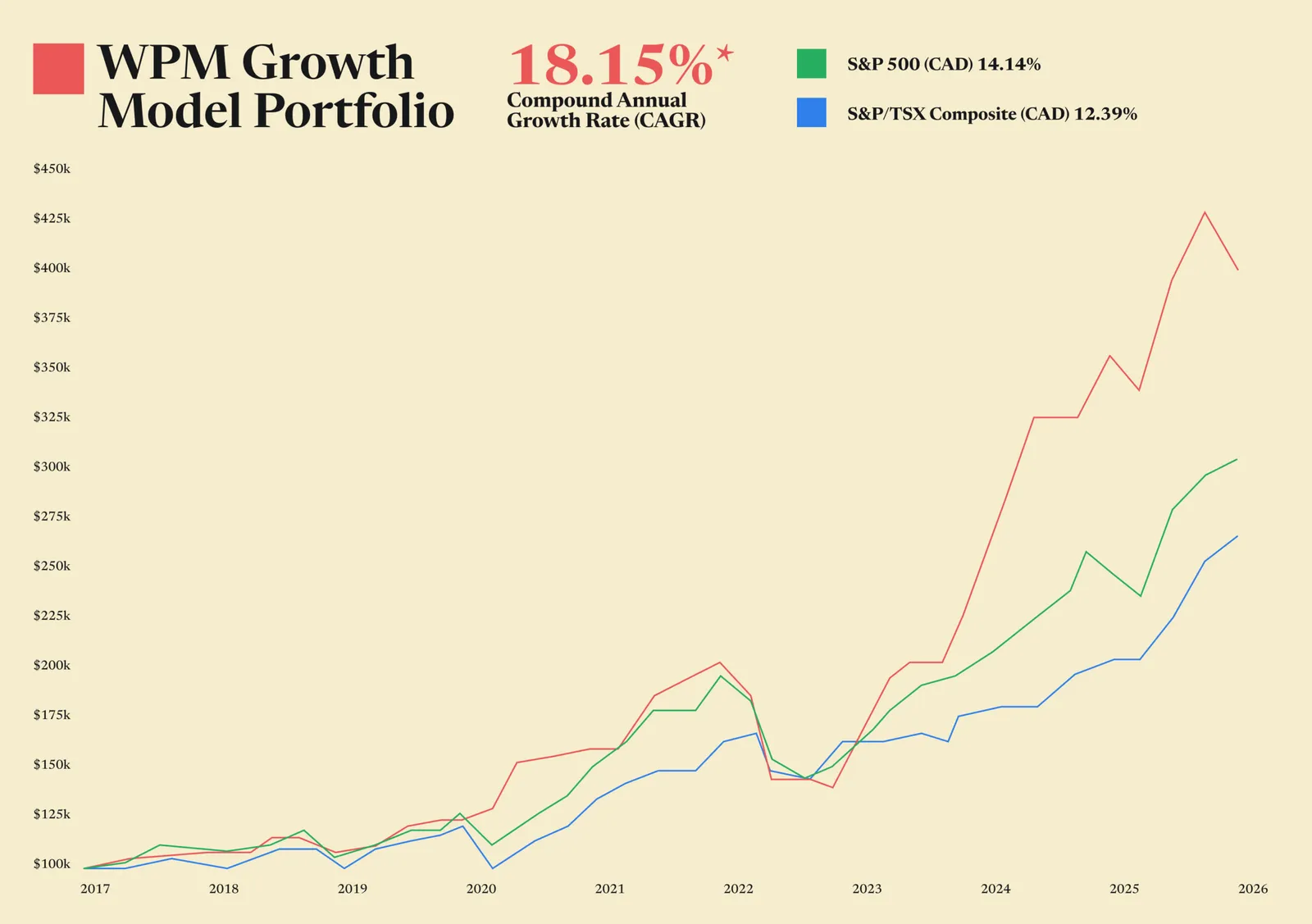
*CAGR independently recalculated by DeVisser Gray LLP. Click here for their report. Return is shown in Canadian dollars, gross of WPM's 2% fee. Past performance doesn't guarantee future results. Investing involves risk, including the possibility of losing money. WPM was registered with the BCSC in March 2023, though the same portfolio manager, James McKnight, has managed the Growth Model Portfolio continuously since inception. Details on benchmark selection here. Details on performance calculations here.
Same setup: $200,000 up front, $1,755/month invested for 25 years. At 18.58% (minus our 2% fee), your portfolio grows to about $15.9 million*.
*At the risk of repeating ourselves—and making our lawyers happy—this is purely an illustration. Past returns don’t guarantee future results.
Real Estate Reality Check
Why is real estate praised as such an “amazing investment”? Because most people only see the appreciation—and forget about the upkeep, taxes, and what they could’ve earned elsewhere.They even convince themselves a mortgage is “investing” and rent is “flushing money down the drain.” But at the end of the day, the number that matters is your net worth at retirement. Here’s the real question: do you care about the story you tell yourself—or your net worth?
And the raw returns are just the start of the trade-offs of homeownership! As Scott Galloway recently observed in No Mercy / No Malice:
Homes are illiquid capital-intensive assets that come with “phantom” costs: Insurance premiums, maintenance bills, and property taxes—all of which are expected to rise due to climate change. Owning also limits diversification, as homes are close to workplaces, meaning a local economic downturn or a natural disaster could wipe out your equity at the same time you lose a job.
Beyond the unavoidable costs of homeownership, there’s the inevitable “while we’re at it, let’s redo the kitchen.” Claiming that renovations “increase the value of your investment” is like saying lighting a $100 bill on fire will eventually earn you $70 back—someday. And of course, there’s the realtor’s commission waiting for you at the finish line.
Vancouver Rentals: More Drama Than Dollars
Rental Properties: Working Harder for Less
But what about rental properties? Aren’t they a good investment?
Not really. In Vancouver, new investors with big mortgages are already cash‑flow negative—the rent doesn’t even cover the bills. And besides strata fees, property taxes, and repairs, landlords face more exotic headaches:
- Vacancy & Turnover: One month without a tenant can wipe out your returns.
- Regulations & Rent Controls: BC’s rent control limits annual increases, which means landlords are consistently unable to keep up with inflation and rising costs.
- Nightmare Tenants: A bad tenant—late, destructive, or simply not paying—can drag you into a Kafkaesque bureaucratic nightmare. If missing a single month’s rent hurts, what happens when a tenant trashes your unit and you’re left holding the bill? Add in a mental health and addiction crisis, and police who can’t intervene in “tenancy disputes,” and instead of passive income, you’re left with stress, debt, and sleepless nights.
Even if everything goes right, rental yields fall as property values rise—and no major Canadian city has higher home prices than Vancouver:
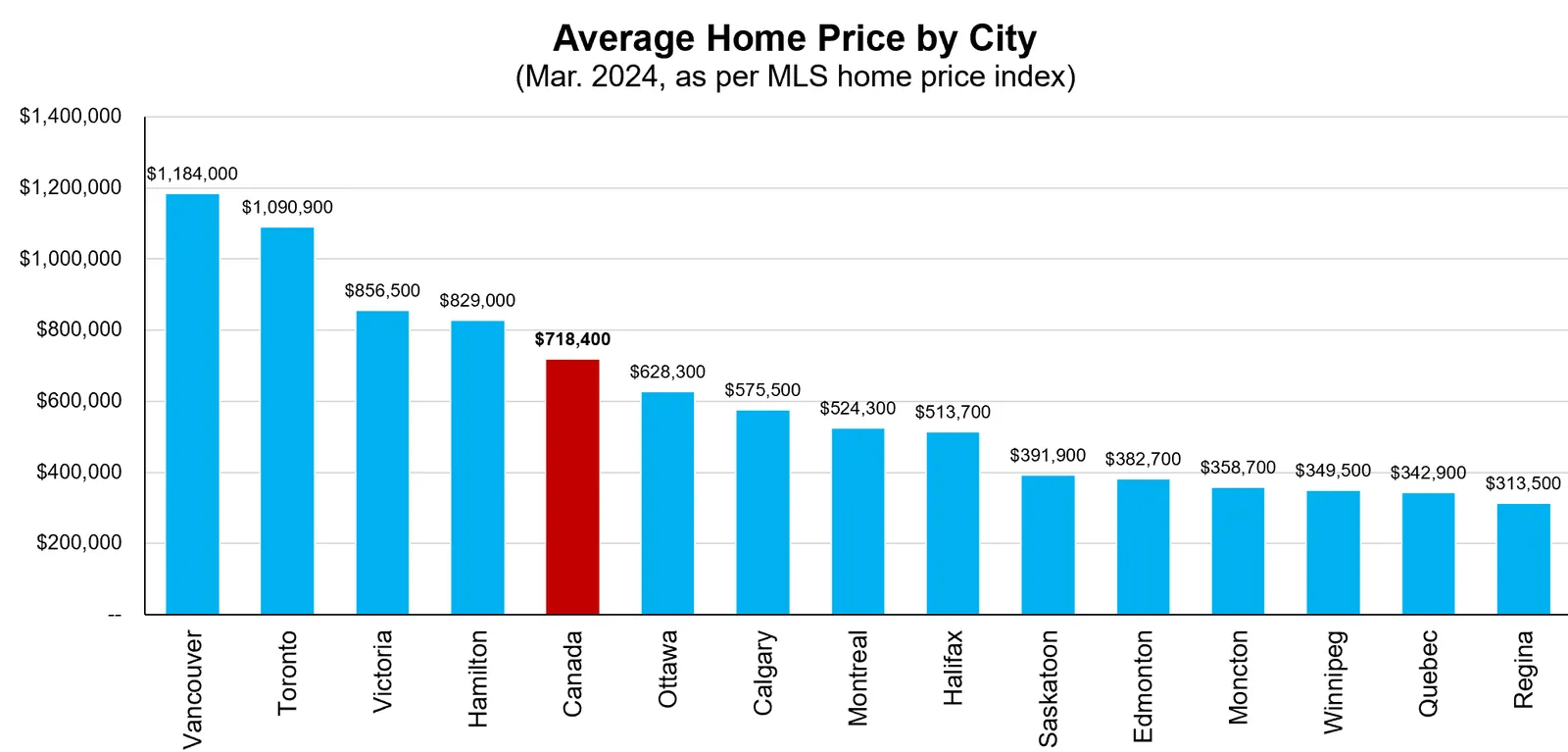
Source: The Measure of a Plan
IG Wealth Management recently found that Toronto rental properties are earning a total annual return of -2.5%. How much better do you think Vancouver is?
And finally, even if you eke out a positive return, your time isn’t free. Every hour you spend wrangling tenants and repairs should be counted as a cost—and deducted from your “profit.”
Your Heart Wants It. Your Wallet Doesn’t.
But math doesn’t stand a chance against the emotions of homeownership: the heart wants what it wants, and the wallet weeps.
The siren song is powerful:
- "It's yours"
- "You're building equity"
- "No landlord can evict you"
- "Paint the walls any color you want"
And it’s an expensive paint job. Because that's what you're really paying for—the right to hang those family photos without permission and the privilege of arguing with your spouse about whether eggshell white is meaningfully different from ivory white.
Love Where You Live. Invest Where It Pays.
At Wealth Preservation Management, we're not saying don't buy a house. Buy it because you love it—because you want a garden, because you've always dreamed of a basement workshop for that boat you’ll never finish.
Just don't buy it as an investment. For that, there's a better* option: the stock market. It doesn’t need a new roof, doesn’t care what colour you paint it, and has a track record of delivering higher returns without asking you to clean its gutters.
Your house isn’t an investment—it’s a relationship. Love it if you want—but don’t expect it to fund the golf, grandkids, and getaways.
Ka-ching, the check is in the mail.
P.S. Buy the house if you love it. Then contact us to invest the rest—where returns are higher and maintenance is zero.
*Again, this analysis is based on historical returns. Nothing is guaranteed, and investing carries the risk of loss. Based on their objectives, risk tolerance, time horizon and personal circumstances, pursuing a high rate of return may not be suitable for all investors